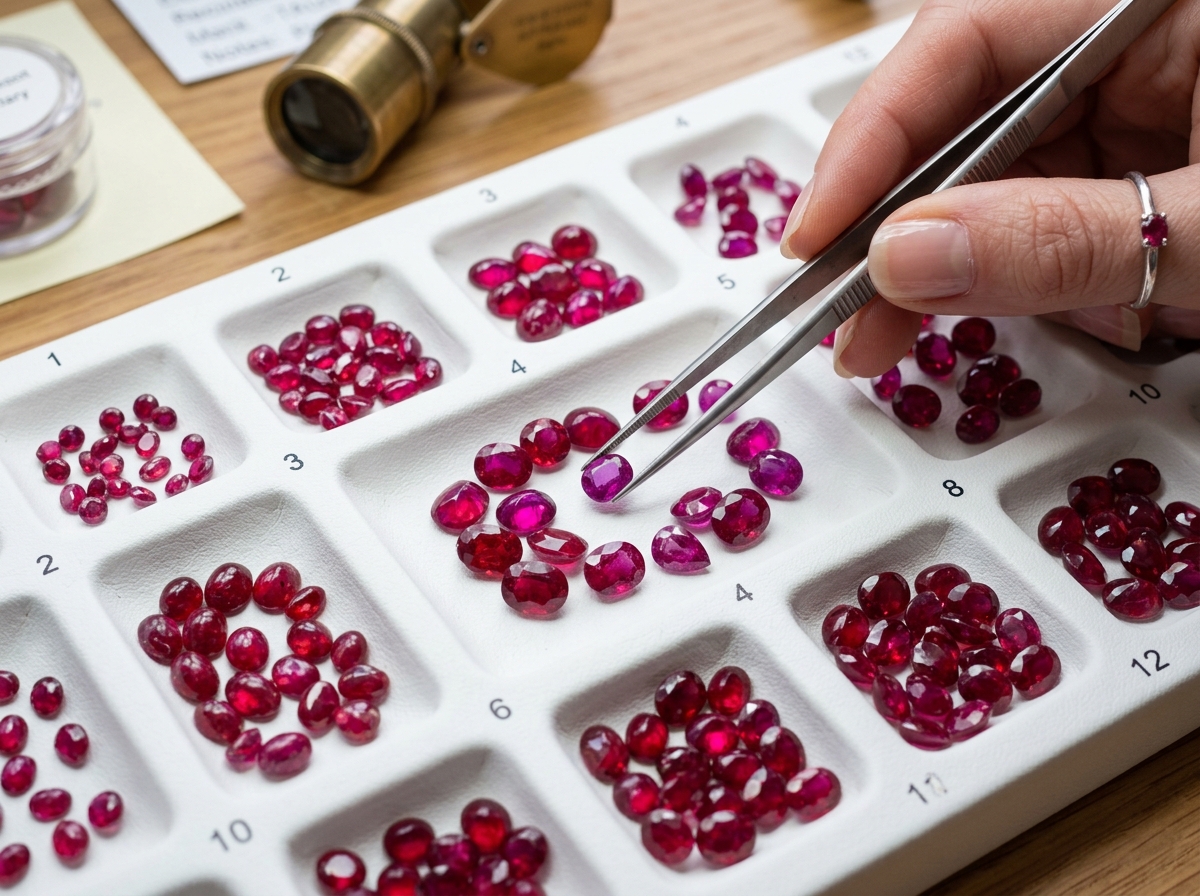
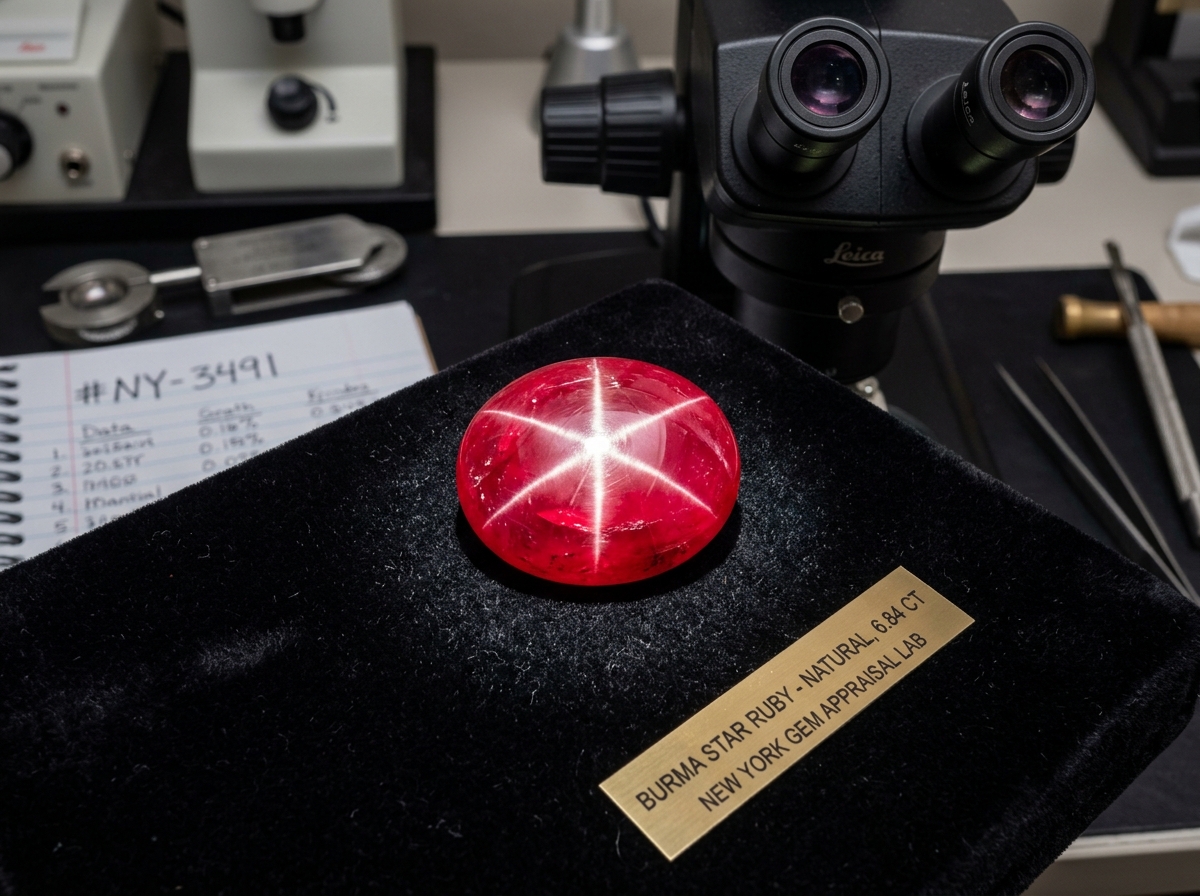
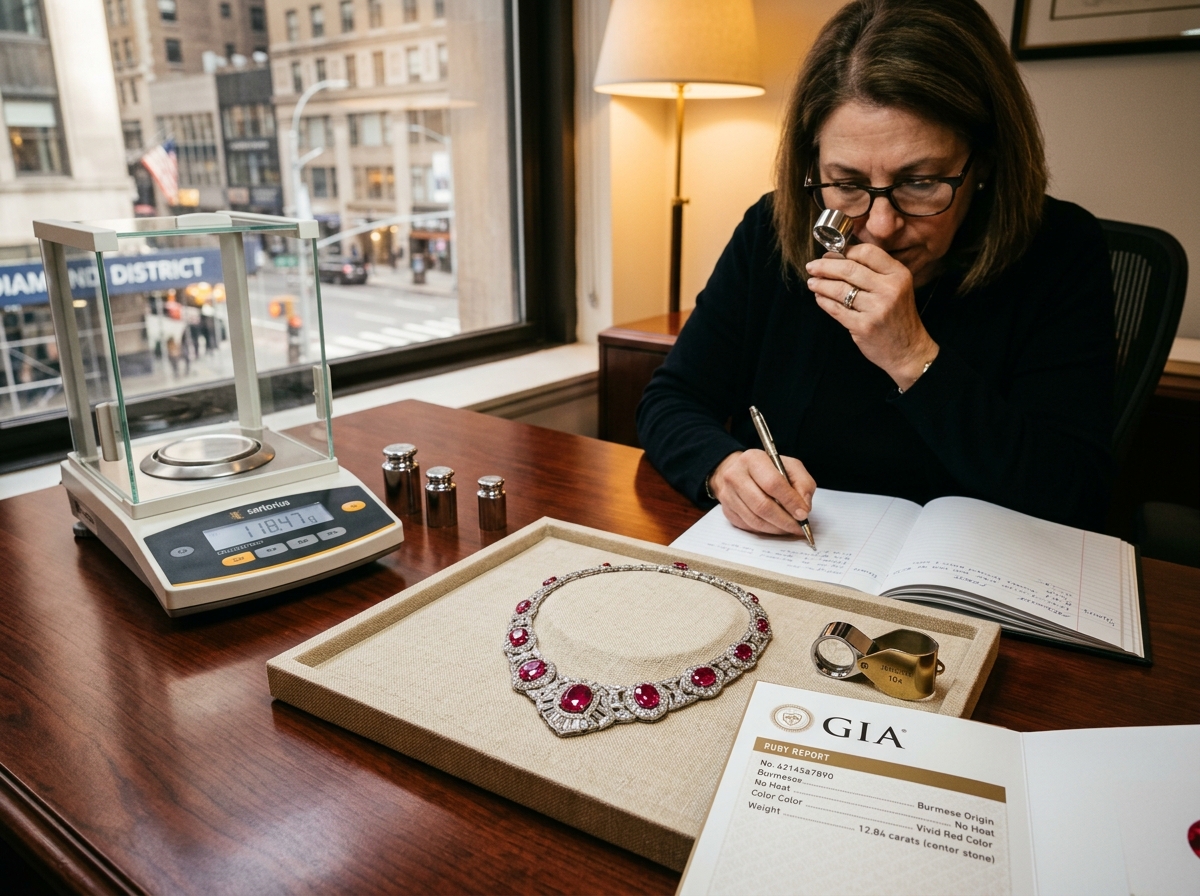
Buyers of NYC reviews eligible loose and mounted rubies for possible purchase at its Manhattan Diamond District office. The team may consider faceted stones, cabochons, star rubies, ruby rings and other jewelry, heated rubies, stones with no evidence of heat, reported or unreported items, and pieces that are worn, damaged or inherited.
A free purchase evaluation can consider identity, natural or laboratory-grown status, color, transparency, cut, size, treatments, origin evidence, condition, setting, documents and current market demand. An evaluation is not a laboratory report, formal appraisal or guarantee that an offer will be made.
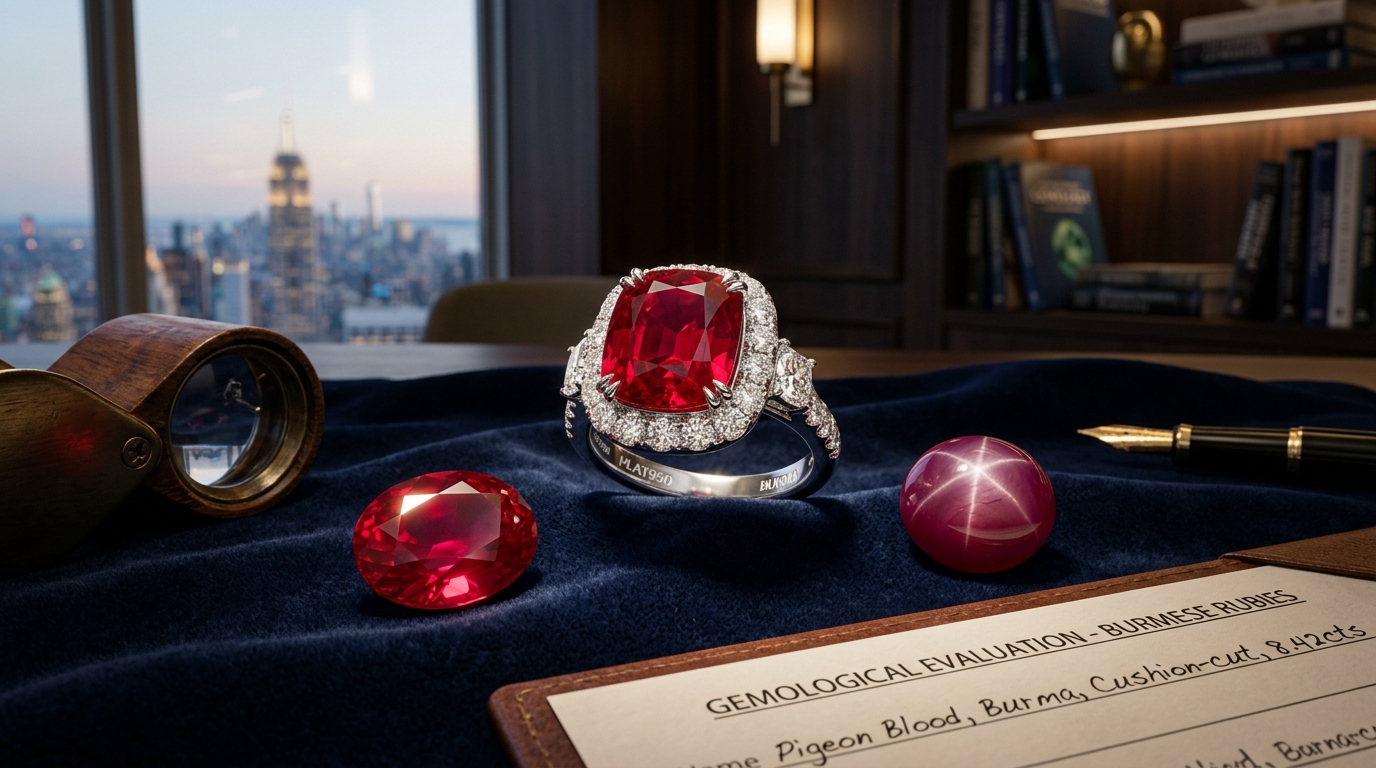
Every stone is tested in-person to confirm natural red corundum identity, ruling out spinels, garnets, synthetic flame-fusion rubies, and glass composites.
Accurate differentiation between unheated natural rubies, standard thermal enhancement, beryllium lattice diffusion, and lead-glass fracture-filled stones.
Evaluation of premier geographic origins (Myanmar/Burma, Mozambique, Madagascar) supported by recognized GIA, AGL, and Gübelin lab reports.
Free in-person purchase evaluation in our secure Diamond District office with immediate wire, company check, or cash funding upon acceptance.
The following representative categories describe the page’s intended purchasing scope for loose faceted gems, cabochons, and fine ruby estate jewelry.
Oval, cushion, round, pear, emerald, and antique cuts.
Evaluated for dominant red hue, medium-dark tone, saturation, transparency, heat/filling disclosure, weight, and origin.
Smooth cabochon domes with or without visible asterism (6-ray star).
Star sharpness, centering, movement under direct light, body color contrast, and natural vs. synthetic status.
Rings, earrings, necklaces, bracelets, brooches, and pendants.
Stone quality plus precious metal (platinum/18K gold), accent diamonds, craftsmanship, and period designer signatures.
Stones with standard evidence or disclosure of thermal enhancement.
Heat treatment is common and accepted in commercial trade. Evaluated for color stability and market demand.
Stones represented as unheated or untreated natural corundum.
Verified through accredited laboratory reports (GIA, AGL, Gübelin, SSEF). Commands substantial scarcity premiums.
Clarity-enhanced corundum with high-lead glass in surface-reaching fissures.
Requires specialized handling and full disclosure. Evaluated under appropriate treatment discounting.
Flame-fusion (Verneuil), flux-grown, or hydrothermal synthetic corundum.
Must be disclosed clearly and never represented as natural. Evaluated based on active secondary demand.
Chipped, abraded, recut, repaired, replaced, or incomplete pieces.
Evaluated for remaining usable stone volume, recut yield potential, and component precious metal liquidation.
Ruby and sapphire are both varieties of corundum (aluminum oxide, Al₂O₃). Red gem corundum colored primarily by chromium is classified as ruby, while lighter pink tones are described as pink sapphire.
Chromium concentration, color saturation, and trade classification
Must display a dominant, primary red hue with sufficient tone and saturation. Secondary purple, pink, or orange modifiers may exist but cannot overpower the red.
Trade standard: Descriptors such as ‘Pigeon’s Blood’ require exceptional pure red hue with strong red fluorescence under ultraviolet light.
Corundum where lower chromium saturation results in pastel pink, vivid magenta, or purplish-pink body color.
Laboratory testing: When classification materially affects value, an independent laboratory report (GIA/AGL) provides definitive classification.
Natural minerals, synthetic corundum, and composite glass
Red spinel, pyrope/almandine garnet, rubellite tourmaline, and zircon can closely mimic ruby color but possess distinct refractive indices and crystal systems.
Refractive testing: Refractometer testing (RI 1.762–1.770 for corundum) quickly separates natural simulants from genuine ruby.
Verneuil flame-fusion synthetics, flux-grown rubies, and lead-glass composite stones are common in secondary markets.
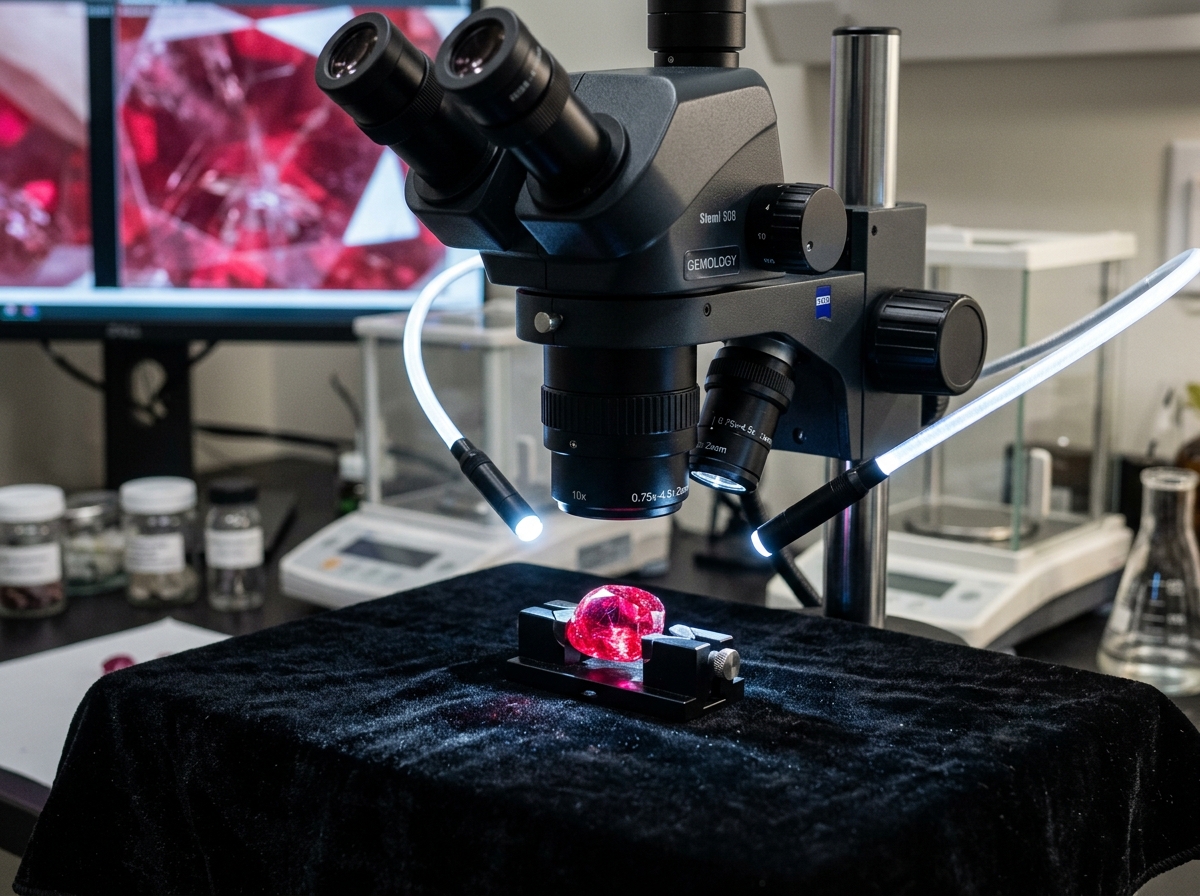
Microscopic identification: Curved growth striae, gas bubbles, and blue/orange flash effects reveal synthetic or glass-filled stones.
Ruby does not have one universal market grade or fixed price-per-carat formula. A purchase evaluation considers the complete item and the evidence available, then determines whether the stone fits a natural-ruby, treated-ruby, laboratory-grown, complete-jewelry, component or other market route.
The first question is whether the item is ruby and whether it is natural, laboratory-grown, imitation, composite or uncertain. A credible report can support this conclusion when matched to the physical stone. Photographs can assist with routing but cannot conclusively identify the material.
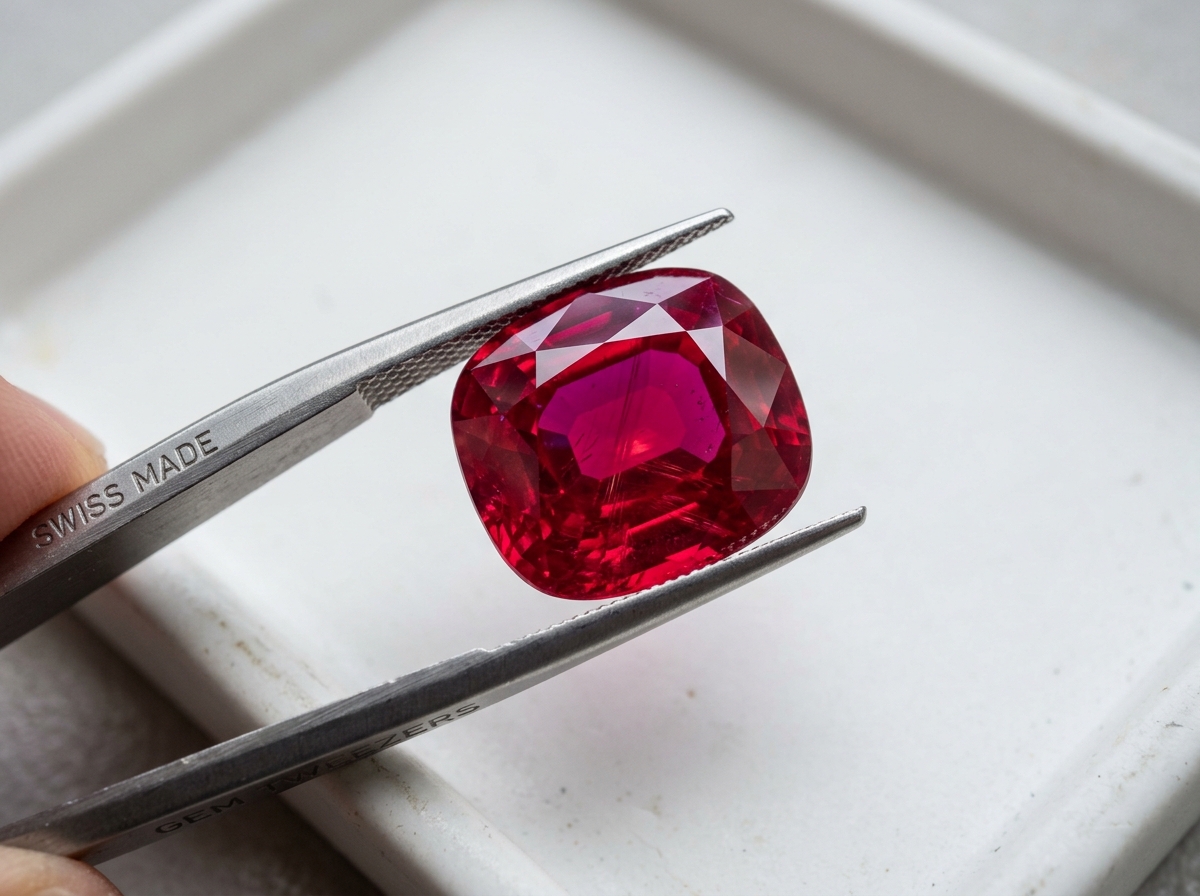
Color is often the most important ruby quality factor. The review considers whether the stone appears pure red, slightly purplish red, orangy red or another range; whether it is too dark or too light; whether saturation is strong; and whether brightness and color distribution support the face-up appearance.
Rubies commonly contain inclusions (‘jardin’). Their visibility, location and effect on transparency, brilliance and durability matter. Some rubies show strong red UV fluorescence, which influences appearance under daylight, but fluorescence alone does not establish origin or value.
The review evaluates outline, proportions, depth, symmetry, polish, windowing, extinction, retained weight and face-up size. Fine-quality ruby becomes increasingly scarce at larger sizes, but size does not overcome weak color, poor transparency, treatment or damage.
Heat treatment is widely encountered in ruby and can alter color or clarity. A report indicating no evidence of heat is market-relevant for a high-quality stone, but unheated status does not automatically make a ruby valuable. Heat-only treatment should be distinguished from diffusion and filling.
Lattice diffusion can introduce color-causing elements. Lead-glass or fracture filling improves the apparent clarity of heavily fractured ruby and changes durability and care requirements. Filled material should never be described as equivalent to untreated or heat-only ruby.
For eligible natural ruby, a qualified laboratory may issue an origin opinion when possible. Myanmar (Burma), Mozambique, Madagascar, Thailand, and Sri Lanka appear in the market, but every deposit produces a range of quality. Origin never replaces color, treatment, transparency and condition.
Star ruby is red star corundum, typically cut as a cabochon to display asterism. Evaluation considers body color, star sharpness, centering, movement, completeness, cabochon dome shape, natural or laboratory-grown status, treatment and condition.
Chips, abrasions, fractures, worn facets, unstable filler, recutting and repair history affect the market route. A mounting can limit observation but adds substantial value through precious metal purity (platinum/18K gold), diamonds, maker, period design and signed provenance (Cartier, Van Cleef).
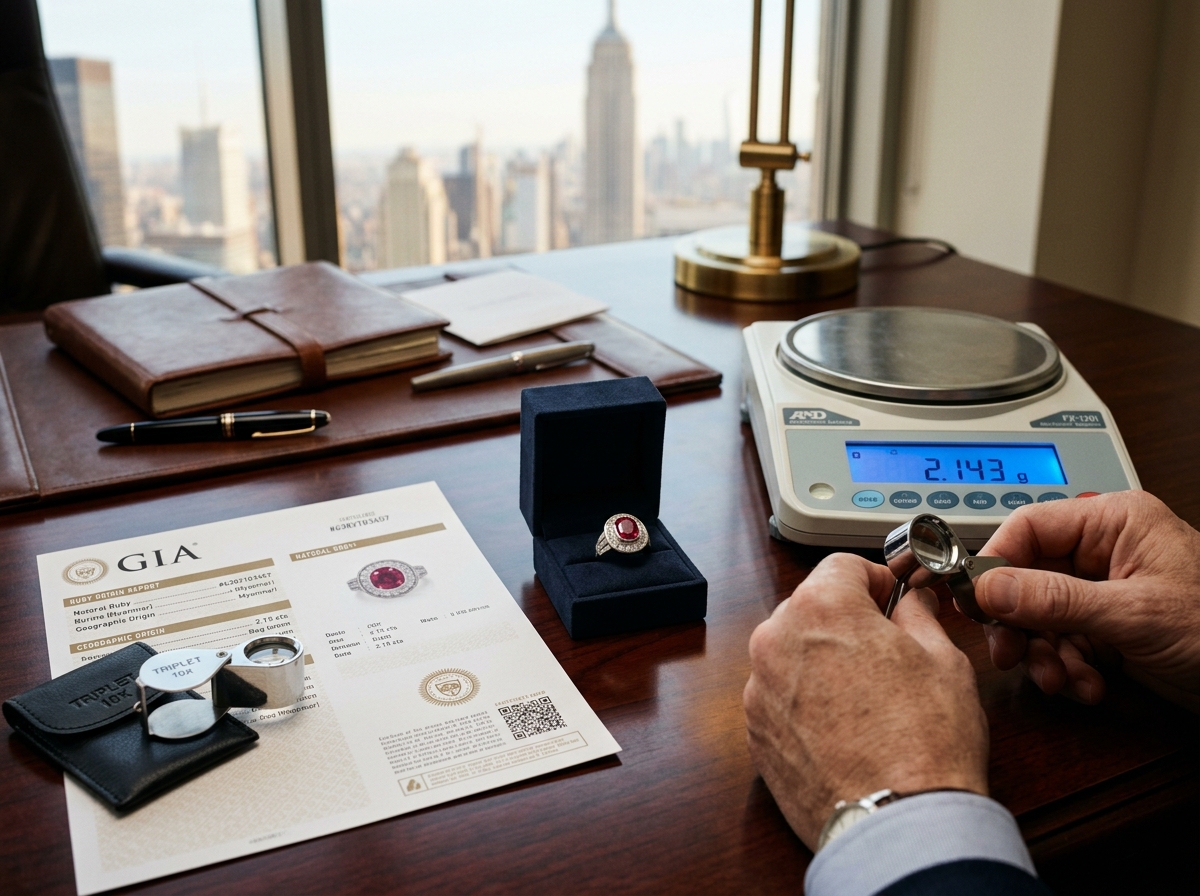
A colored-stone report identifies material, natural or lab-grown status, detectable treatments and geographic origin opinions. GIA does not issue a universal monetary grade. Current demand and the likely resale route remain item-specific.
Understanding the critical differences between unheated gems, heat enhancement, lead-glass filling, and geographic origin opinions ensures clear, transparent market expectations.
Fracture-filled ruby contains high-lead glass in surface-reaching fissures to artificially improve apparent clarity. The glass filler is vulnerable to heat, ultrasonic vibrations, household acids, and even lemon juice.
Heat treatment is standard and stable. Lattice diffusion introduces foreign elements under high heat. Lead-glass filling is a composite enhancement. These are distinct categories with different durability and demand consequences.
No. While accredited laboratory origin opinions matter for exceptional natural rubies, every mine produces a range of quality. A famous source never overcomes poor color, low transparency, heavy treatment, or damage.
A colored-stone report describes weight, millimeter dimensions, cutting style, and color, indicates natural vs. lab-grown status, and lists detectable treatments. GIA does not issue universal ruby grades or dollar values.
Standardized treatment definitions and secondary market liquidity realities (S21 DOCX Table 29)
A credible laboratory report found no evidence of thermal enhancement within its analytical scope. Extremely scarce in fine quality.
Market distinction: Highly market-relevant for high-quality material; unheated status does not compensate for weak color or poor clarity.
The stone has undergone standard thermal enhancement to improve color saturation or dissolve light silk. Stable and permanent.
Market distinction: Widely encountered in global trade; secondary market liquidity depends on overall color, cut, clarity, and demand.
Foreign elements (beryllium/titanium) have been introduced under high heat and chemicals to induce artificial surface or shallow color.
Market distinction: Different from traditional heat-only treatment; requires full disclosure and trades at a substantial discount.
Surface-reaching fissures contain high-refractive-index lead glass to improve apparent transparency. Vulnerable to heat and acids.
Market distinction: Materially changes durability, care, and value; evaluated under dedicated composite material routes.
Observation scope, weighing precision, and complete-piece value
A loose ruby allows complete 360-degree microscopic measurement, pavilion inspection, and exact carat weighing on legal-for-trade certified digital scales.
Laboratory testing: Essential when comprehensive origin determination or advanced treatment spectroscopy is requested.
Mounted ruby jewelry is appraised for complete-piece value, incorporating precious metal weight (platinum/18K gold), accent side diamonds, craftsmanship, and historic maker provenance (Cartier, Van Cleef & Arpels, Tiffany).
Critical safety rule: Do not attempt to unmount or remove a ruby from its setting prior to your evaluation. Unnecessary removal risks chipping the gemstone and destroys period jewelry value.
Our five-stage evaluation protocol provides a seamless, confidential, and transparent appraisal experience at our Manhattan Diamond District office.
Identify loose/mounted form, believed ruby type, approximate size, and existing documentation online or by phone.
Bring the item as found with lab reports, receipts, appraisals, and original boxes to our Manhattan office.
Our specialists test optical properties, refractive index, silk inclusions, treatments, cut, and metal purity.
We present a clear, competitive secondary-market purchase offer based on real-time dealer liquidity.
Zero obligation to sell. If accepted, immediate same-day payment is issued via wire, check, or cash equivalent.
A few practical steps help streamline the evaluation and protect the item’s original condition.
Do not attempt to unmount, polish, file, or recut the stone prior to evaluation.
Do not expose rubies of uncertain treatment to steam, ultrasonic baths, bleach, or acidic dips.
Keep grading reports (GIA/AGL/Gübelin), receipts, prior appraisals, service records, and boxes together.
Inform the team of known heat, glass filling, synthetic origin, or previous repairs.
Call 646-400-4553 before transporting high-value estate collections, rough parcels, or fragile items.
Asking these questions helps clarify how different buyers evaluate red corundum.
What identity and natural vs. laboratory-grown assumptions were used in the valuation?
How were hue, tone, saturation, transparency, and face-up brilliance considered?
Was heat, diffusion, or lead-glass filling identified, documented, or merely assumed?
Is an origin claim supported by accredited laboratory evidence (GIA/AGL/Gübelin)?
Is the figure an immediate outright purchase offer, consignment estimate, or retail appraisal?
Visit our Manhattan Diamond District office to meet with our GIA-trained gemologists and experienced colored gemstone specialists for a private, no-obligation evaluation.

Head of Precious Metals

Head of Fine Jewelry

Head of Watches

Head of Diamonds & Precious Stones
Eligible heated stones and stones reported as showing no evidence of heat may be reviewed. Treatment is one factor among color, transparency, size, cut, condition, origin evidence and current demand.
Glass-filled material requires separate disclosure, durability and care considerations and may follow a different market route from untreated or heat-only ruby.
A ruby can be reviewed without a report, but natural or laboratory-grown status, treatment and origin may remain uncertain. Some items may require qualified laboratory analysis.
No. A suitable laboratory origin opinion can matter for exceptional natural ruby, but every source produces a range of quality. Color, treatment, transparency, cut, condition and demand remain essential.
Both are corundum. Red material is generally ruby, while lighter pink material may be described as pink sapphire, but the boundary can require qualified judgment and can vary by market.
Laboratory-grown ruby must be disclosed clearly and should not be represented as natural. Acceptance depends on current commercial demand.
Photographs can assist with preliminary routing but cannot conclusively establish identity, natural or laboratory-grown status, treatment, origin, exact color, internal condition or a binding offer.
Eligible star rubies may be reviewed. The evaluation can consider body color, star sharpness, centering, movement, cabochon proportions, natural or laboratory-grown status, treatment and condition.
Mounted stones may be reviewed, although the setting can limit exact measurement and observation. The complete jewelry item may also have value from its maker, diamonds, metal, design and condition.
Bring it as found. Warm soapy water may be safe for many untreated or heat-treated rubies, but filled, dyed or uncertain material can require much more conservative care. Avoid steam, ultrasonic cleaning and chemicals when treatment is unknown.
Damaged stones may still be reviewed. The team may consider remaining usable material, recut potential, treatment stability, setting value and current demand without guaranteeing an offer.
Yes. The purchase evaluation is free and carries no obligation to accept an offer. It is not a laboratory report, formal appraisal or guarantee that an offer will be made.

Buyers of NYC is located at 36 W 47th Street, Booth W07, New York, NY 10036, in Manhattan’s Diamond District. Current published hours are Monday – Friday: 10:00 AM – 6:00 PM. Appointments are preferred and walk-ins are welcome during published hours.
36 W 47th Street, Booth W07
New York, NY 10036
(Between 5th & 6th Avenues)
Monday – Friday: 10:00 AM – 6:00 PM
Appointments preferred; walk-ins welcome
Phone: 646-400-4553
Email: buyersofnyc1@gmail.com
For high-value unheated rubies, Burma/Mozambique origin stones, or signed ruby jewelry, signed designer pieces, or estate collections, calling 646-400-4553 in advance ensures dedicated evaluation time with our GIA-trained specialists.
Describe your loose ruby or ruby jewelry (approximate carats, color, known heat treatment, origin report, and setting metal).
Privacy & Safety Notice: Do not upload government identification, Social Security numbers, bank details, or confidential estate records. Online submissions are preliminary and do not create a purchase offer, authentication, or obligation to sell.