36 W 47th St, Booth W07, New York, NY 10036Mon–Fri: 10:00 AM – 6:00 PM
36 W 47th St, Booth W07, Diamond District
Mon–Fri: 10:00 AM – 6:00 PM (Walk-ins Welcome)
Licensed NYC Buyer • Free Precision Appraisal
MANHATTAN DIAMOND DISTRICT • ENGAGEMENT RING BUYERS

Sell an Engagement Ring in NYC

Buyers of NYC considers natural and laboratory-grown diamond engagement rings, signed and unsigned rings, modern and antique settings, rings with or without papers, and pieces that are worn, damaged or incomplete. Visit our Manhattan Diamond District office for a free, no-obligation purchase evaluation. If the team wishes to purchase your ring, you can review the offer, ask questions and decide whether to proceed.

An engagement ring should be reviewed as a complete item before anyone assumes that its value comes only from the center diamond or the precious-metal setting. The principal stone, side stones, design, maker, condition, documentation and current secondary-market demand may all affect the most appropriate valuation route.
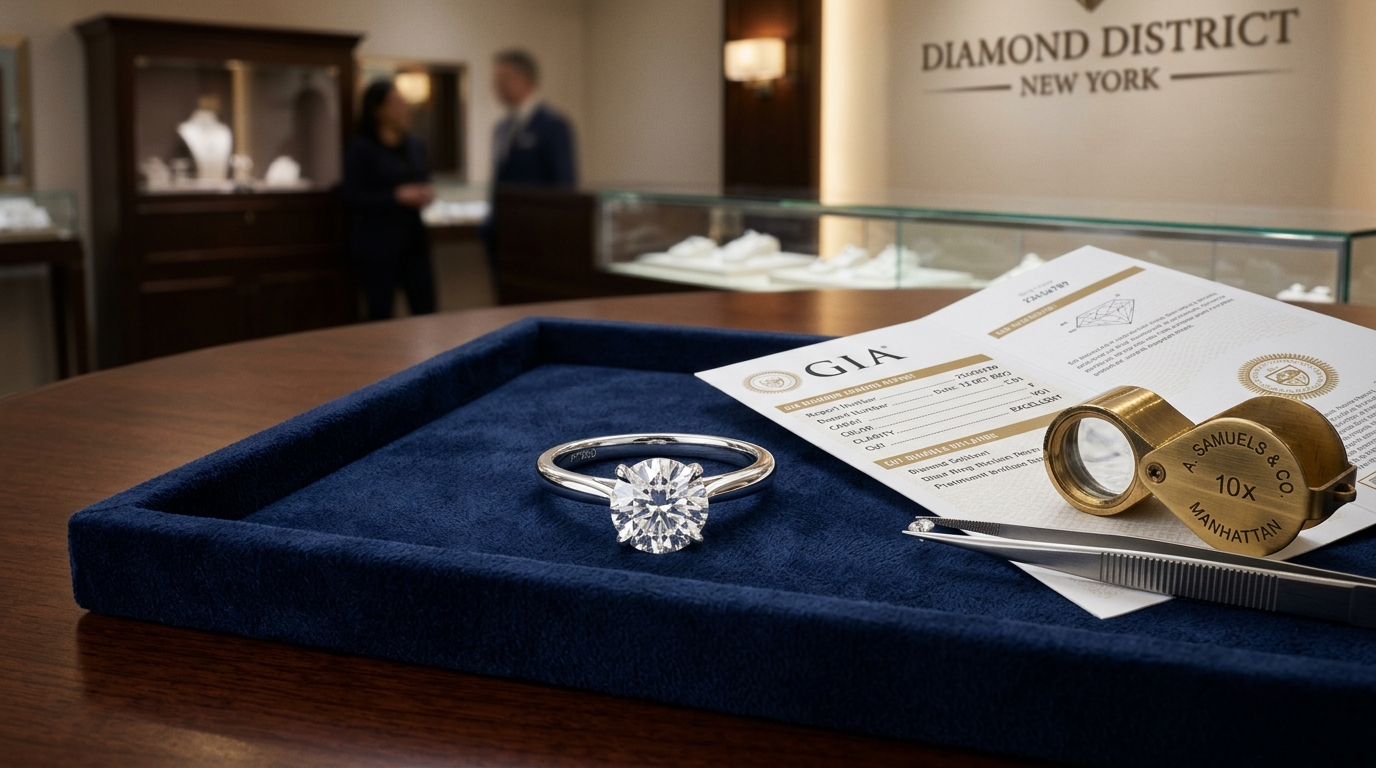

Diamond engagement ring prepared for evaluation in Manhattan
LICENSED & CERTIFIED IN NEW YORK CITY

Recognized Credentials, Industry Licenses & Certified Gemologists

FREE & CONFIDENTIAL EVALUATION

Why Sellers Choose Buyers of NYC for Engagement Ring Purchases

GIA-Trained Gemologists

Every ring is reviewed in-person by certified gemologists using professional diamond grading microscopes, colorimeters, and high-precision electronic balances.

Complete-Piece Evaluation

We assess the principal center stone, side diamonds, fine platinum/gold settings, and designer signatures together rather than treating the piece merely as scrap metal.

Private & Respectful

Evaluations are conducted in a secure, discrete Midtown office. We never inquire about emotional circumstances, divorce, or reasons for selling.

Immediate Settlement

Receive a transparent, no-obligation purchase offer with immediate payment via same-day wire transfer, company check, or cash upon acceptance.

Category Directory

What Types of Engagement Rings Does Buyers of NYC Consider?

Engagement rings are created in diverse diamond shapes, setting styles, metals, and designer provenance. Buyers of NYC considers individual rings, matching bridal sets, and estate collections, subject to physical inspection.
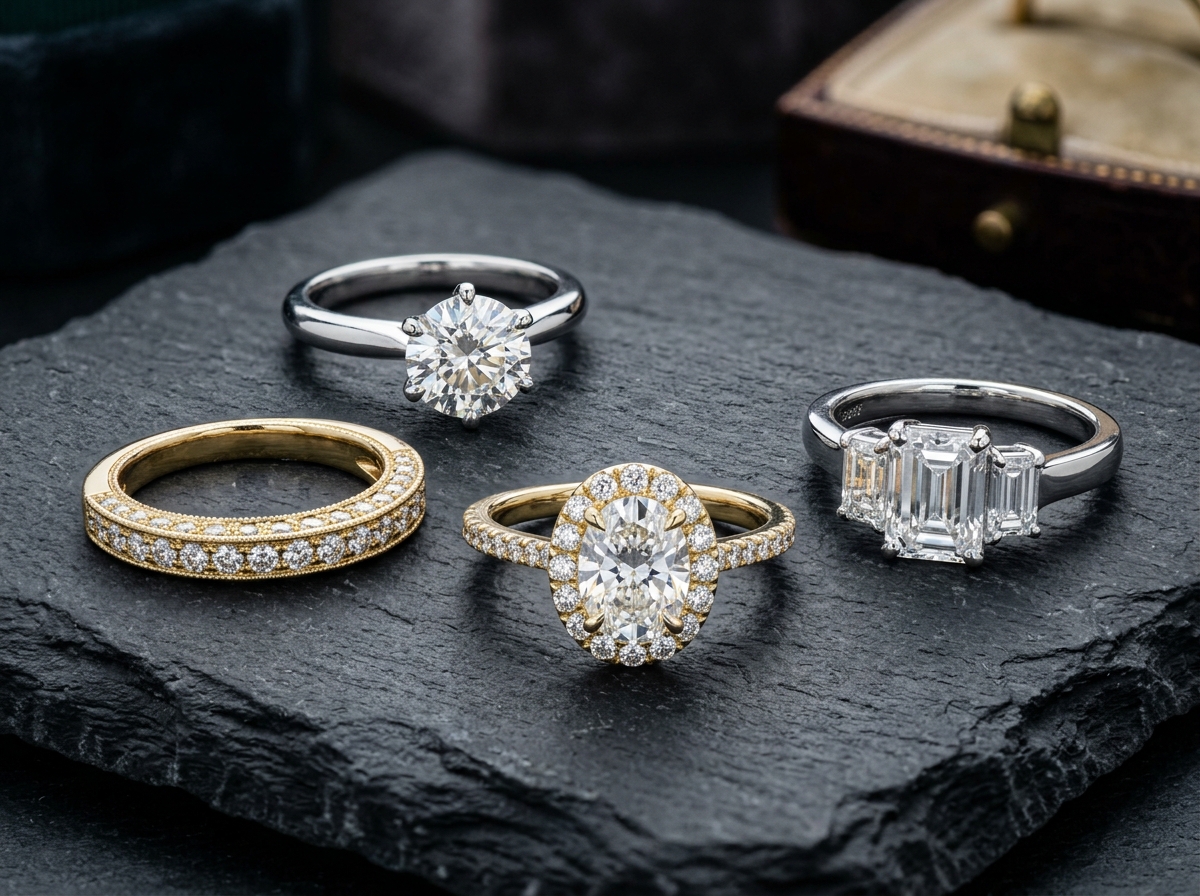
Engagement Ring Styles and Diamond Solitaire Directory
Physical Authentication

Fine Diamond Rings, Solitaires & Designer Bridal Jewelry

01

Solitaire Engagement Rings

Classic Solitaire
Representative examples

Single center diamond on a classic plain, tapered, knife-edge, or comfort-fit band in platinum or gold

Evaluation considerations

Center diamond 4Cs, prong security, shank integrity, metal hallmark, and laboratory report match

Request an Engagement Ring Evaluation
02

Halo & Hidden-Halo Rings

Halo & Hidden-Halo
Representative examples

Center stone framed by a perimeter of micro-pavé or accented beneath the gallery with a hidden halo

Evaluation considerations

Center diamond quality, melee color/clarity matching, micro-prong security, and setting condition

Request an Engagement Ring Evaluation
03

Three-Stone & Multi-Stone Rings

Three-Stone & Multi
Representative examples

Trio settings featuring matched side baguettes, trillions, pears, or rounds alongside the center stone

Evaluation considerations

Side stone carat weights, symmetry, color/clarity consistency across stones, and mounting structure

Request an Engagement Ring Evaluation
04

Pavé & Channel-Set Rings

Pavé & Channel
Representative examples

Bands featuring continuous or semi-eternity diamond accents set into shanks, halos, or galleries

Evaluation considerations

Total accent carat weight, missing or chipped melee, channel wall integrity, and sizing restrictions

Request an Engagement Ring Evaluation
05

Vintage & Antique Rings

Historic / Vintage
Representative examples

Art Deco, Edwardian, Victorian, and mid-century retro mountings with hand filigree and milgrain

Evaluation considerations

Period authenticity, European/Old Mine cuts, hand engraving condition, originality, and demand

Request an Engagement Ring Evaluation
06

Designer & Signed Rings

Designer / Signed
Representative examples

Original signed pieces from Tiffany & Co., Cartier, Harry Winston, Van Cleef & Arpels, and Tacori

Evaluation considerations

Authentic brand hallmarks, serial numbers, original boxes, retail receipts, and resale brand equity

Request an Engagement Ring Evaluation
07

Laboratory-Grown Diamond Rings

Laboratory-Grown
Representative examples

CVD and HPHT grown diamonds mounted in modern white gold, platinum, and yellow gold settings

Evaluation considerations

Spectroscopic growth verification, 4Cs grading, secondary market index pricing, and metal recovery

Request an Engagement Ring Evaluation
08

Damaged or Incomplete Rings

Damaged / Worn
Representative examples

Rings with worn prongs, thinned shanks, missing accent stones, or chipped center diamonds

Evaluation considerations

Payable precious metal weight, reclaimable center stone yield, and component breakdown value

Request an Engagement Ring Evaluation

Representative makers and designers customers may present include Tiffany & Co., Cartier, Harry Winston, Van Cleef & Arpels, Graff, Bulgari, David Yurman, Tacori, Verragio, Hearts On Fire and custom Diamond District jewelers. The list is illustrative, not exhaustive, and does not imply affiliation or automatic acceptance.

Format & Market Guide

Is It an Engagement Ring, Wedding Band or Fashion Ring?

The distinction matters because bridal centerpieces, matching wedding bands, and standalone diamond fashion rings follow distinct secondary market dynamics even when crafted from identical precious metals.

Current Page

Diamond Engagement Ring

Product: Principal diamond centerpiece ring
Working Definition

A fine jewelry ring designed around a prominent principal center diamond or gemstone, presented with or without accent melee.

Where to Learn More: Evaluate Engagement Rings
Eternity & Bands

Diamond Wedding Band

Product: Eternity, semi-eternity or plain band
Working Definition

A matching wedding ring or eternity band featuring continuous melee diamonds or precious metal, evaluated individually or as a matched set.

Where to Learn More: Sell Diamond Ring Guide →
Fashion & Estate

Fashion & Cocktail Ring

Product: Cluster, right-hand or statement ring
Working Definition

A decorative multi-stone or cluster diamond ring designed for statement wear rather than traditional bridal engagement.

Valuation Methodology

How Is an Engagement Ring Evaluated?

Evaluating an engagement ring requires examining all eight interdependent value drivers — from center stone origin and 4Cs to total carat distribution, setting metal, brand provenance, and secondary market demand — rather than applying a generic metal-scrap or loose-stone formula.

Center Diamond 4Cs and Engagement Ring Inspection

1. Center Diamond Identity and Origin

Origin First

The team first considers whether the principal stone appears to be a natural diamond, a laboratory-grown diamond, another gemstone or a simulant. Natural and laboratory-grown diamonds are both diamonds, but they are separately disclosed products and follow distinct secondary markets. Simulants such as cubic zirconia or moissanite are not diamonds.

Seller Guidance: Natural and laboratory-grown diamonds follow distinct secondary pricing benchmarks. Bring laboratory reports (GIA, IGI) when available.

2. The Center Diamond’s Quality Characteristics

4Cs Precision

For a diamond center, relevant characteristics include carat weight, shape, measurements, color, clarity under 10× magnification, cut proportions, polish, symmetry, fluorescence, treatments and condition. Chips, abrasions, and damage near prongs affect marketability. Fancy-shaped diamonds are evaluated through proportions and face-up appearance.
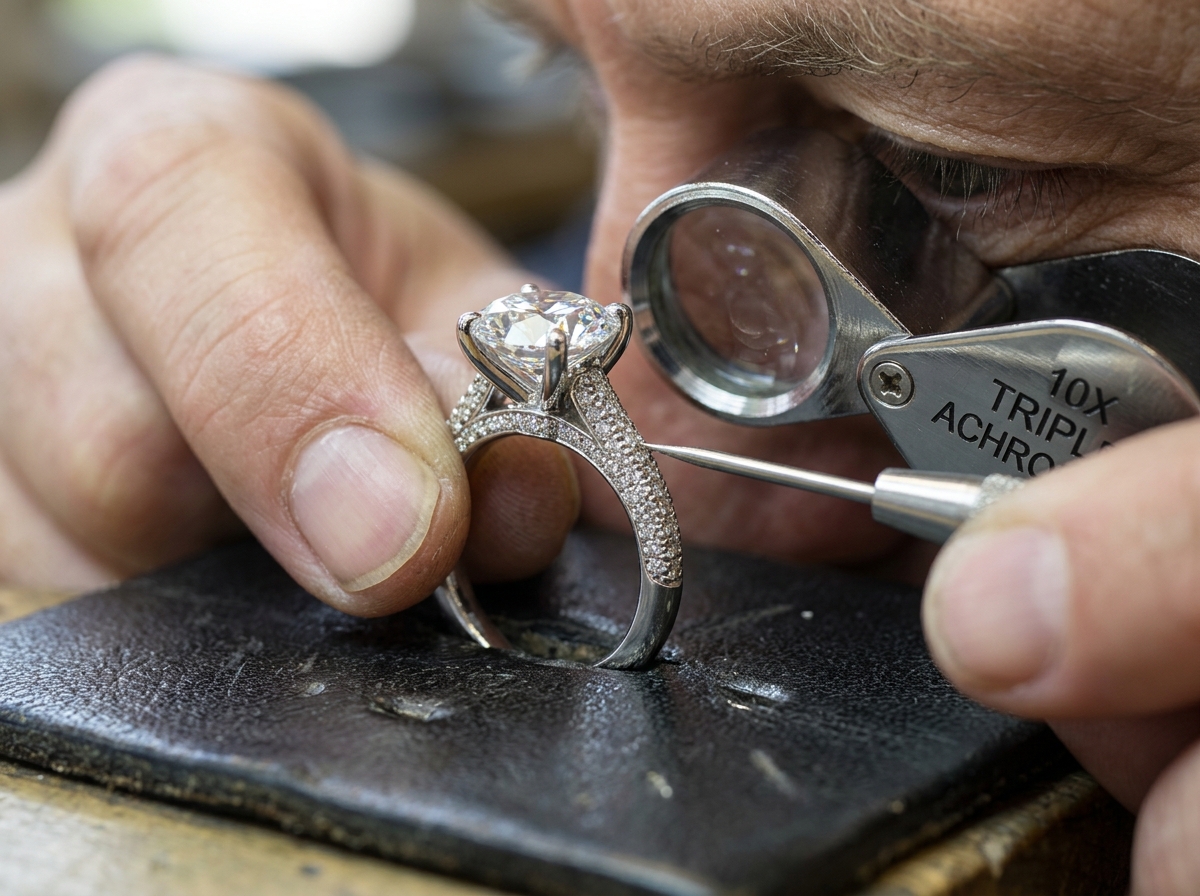
Seller Guidance: Laboratory reports verify 4Cs parameters, but physical inspection establishes authentic optical performance and luster.
Precious Metal Ring Setting and Side Diamond Accents

3. Center-Stone Weight Versus Total Carat Weight

Carat Distribution

Carat weight describes the weight of one diamond. Total carat weight describes the combined weight of all diamonds in a multi-stone piece. A ring with a 1.00 ct center diamond has a vastly different secondary market value than a ring with multiple small accent stones totaling 1.00 CTW. The center diamond and side stones are always evaluated separately.

Seller Guidance: The center diamond, individual side stone sizes, and overall distribution are evaluated separately for maximum yield.

4. Side Stones, Halos and Matching

Melee & Accents

Side stones may include matched diamonds, tapered baguettes, halos, pavé, channel-set stones or colored gemstones. The evaluation considers their number, individual size, shape, consistency, damage, and design contribution. A well-coordinated three-stone or halo ring is reviewed as a finished piece rather than discounted to metal scrap.
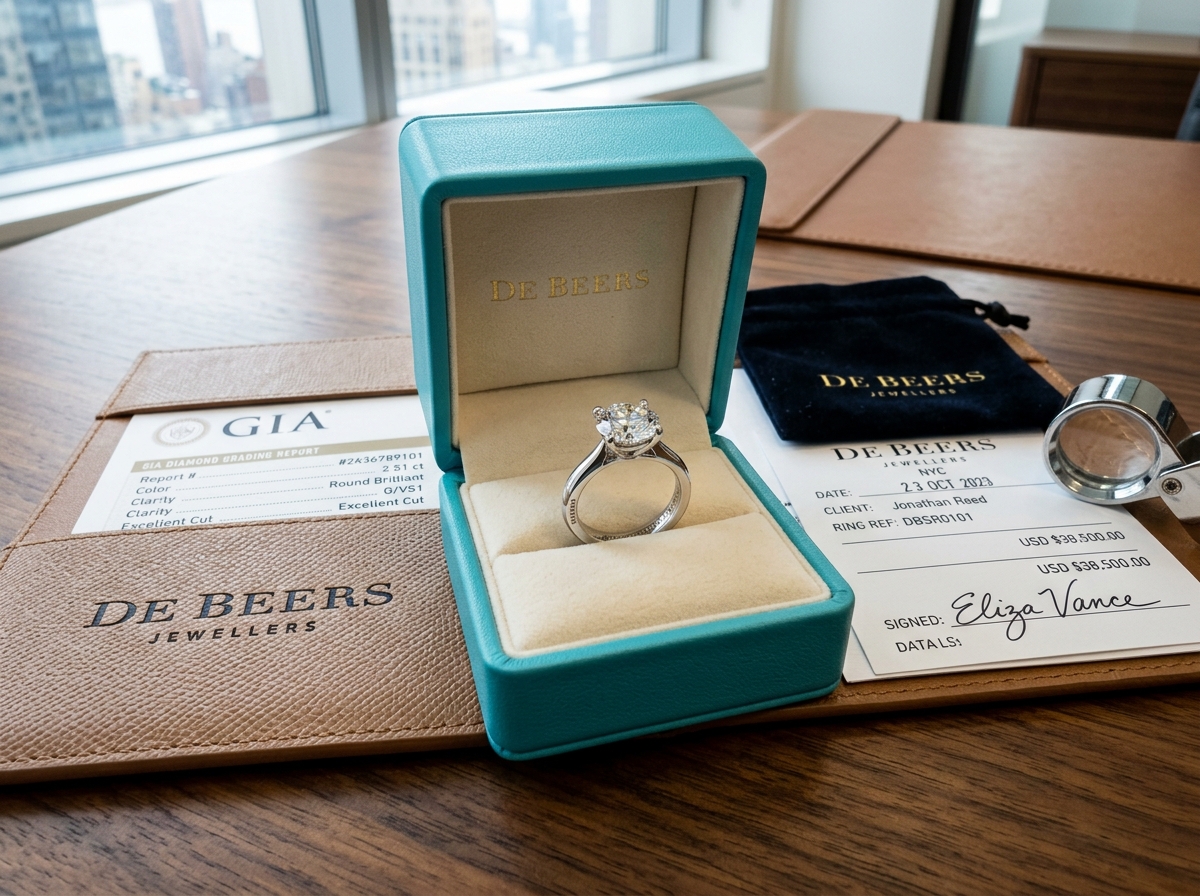
Seller Guidance: Coordinated three-stone, halo, and pavé configurations receive complete-piece valuation consideration.
Diamond Ring Provenance and Complete Bridal Set Value

5. Setting Metal, Construction and Condition

Metal Purity

The setting may be gold (14K, 18K), platinum (Pt950) or another material. The review considers gross weight, payable metal weight, prongs, bezel, basket, gallery, shank wear, solder points, rhodium plating, and structural integrity. Do not repair, resize, or polish away historic hallmarks before professional evaluation.

Seller Guidance: Do not polish away historic hallmarks, resize, or alter the ring before your professional evaluation.

6. Setting Style and Complete-Piece Marketability

Style & Demand

Solitaire, halo, three-stone, pavé, bezel, cathedral and vintage settings appeal to different buyers. The team considers how design, stone shape, proportions, craftsmanship, condition and demand work together. A ring can be worth more as a complete piece, while damaged settings are valued through component recovery.

Seller Guidance: Bringing matching wedding bands or ring enhancers ensures full complete-set valuation.
Diamond Engagement Ring Secondary Market Demand Evaluation

7. Brand, Signature, Period and Provenance

Maker & Provenance

A recognizable maker’s mark (Tiffany & Co., Cartier, Harry Winston, Van Cleef & Arpels, Tacori) or historic period (Art Deco, Edwardian) may warrant significant premium. Original boxes, receipts, order records, laboratory reports, and repair documentation support identification and complete presentation.

Seller Guidance: Original boxes, sales receipts, and brand certificates support authenticity and premium valuation.

8. Current Secondary-Market Demand

Market Realization

The original retail price is not the current resale market. Demand for the center stone’s origin and specifications, brand desirability, availability of comparable pieces, and whether the best route is a finished ring, loose diamond, or precious-metal recovery establish true liquidity.

Seller Guidance: Our direct Diamond District wholesale network allows us to optimize offers based on live global dealer demand.
Calculation Framework
MATHEMATICAL FORMULA

How Is Engagement Ring Value Calculated?

An engagement ring purchase offer reflects the combined market contribution of the center diamond, mounting metal, secondary gemstones, and brand/collector demand:

Center Diamond Principal 4Cs Value Wholesale Benchmark
+
Setting Metal Platinum / Gold Yield Payable Pure Metal
+
Side Stones Melee & Accents Matched Diamond Weight
+
Brand & Design Signature Equity Complete-Piece Premium
=
Total Purchase Offer Net Settlement Immediate Payout
Component Itemization Note: Every element is evaluated independently. A 1.50 ct center diamond is valued from global wholesale indices, while the platinum mounting and diamond halo melee are added to create your complete purchase offer.

Can an Engagement Ring Be Evaluated While Mounted?

Yes. A mounted review provides critical information about the ring’s overall craftsmanship, metal hallmarks, condition, approximate diamond measurements, and complete-piece appeal.

Seller Guidance: Bring the ring intact. Do not unmount the diamond or attempt stone removal before your evaluation. If an offer depends on parameters obscured by prongs or bezels, our gemologists will discuss appropriate non-destructive options.

Center Stone Weight vs. Total Carat Weight (CTW)

A listing, appraisal, or receipt stating “1.50 Total Carat Weight (CTW)” does NOT mean the center diamond weighs 1.50 carats. It combines the weight of all diamonds in the mounting.

Important Distinction: A 1.00 ct center diamond with 0.50 ctw halo accents has a completely different valuation profile than ten 0.15 ct melee diamonds totaling 1.50 ctw. Bring original reports or receipts when available.
Diamond Material Distinction

Natural, Laboratory-Grown and Simulant Centers

An engagement ring can contain a natural diamond, a laboratory-grown diamond, a colored gemstone, or a simulant. These terms are not interchangeable, and each follows distinct secondary-market dynamics.

Natural Diamonds

Mined Origin

Formed naturally over billions of years in the earth’s mantle. Highly established secondary market with institutional global trading benchmarks.

Key Benchmark: GIA / AGS grading reports, 4Cs characteristics, and complete-piece estate appeal.

Laboratory-Grown Diamonds

CVD / HPHT

Man-made diamonds possessing identical physical, optical, and chemical properties as natural diamonds, manufactured via CVD or HPHT methods.

Valuation Route: Evaluated on center-stone quality, IGI/GCAL paperwork, and precious metal mounting yield.

Simulants & Alternatives

Non-Diamond

Moissanite, cubic zirconia, white sapphire, or crystal. These look diamond-like but are distinct materials and not diamond products.

Valuation Route: Value resides predominantly in the precious metal setting (gold/platinum) and branded mounting.
Document & Valuation Insights

Why Can the Receipt or Insurance Appraisal Differ From a Purchase Offer?

A retail receipt records a past purchase. An insurance appraisal commonly estimates a replacement amount for a specific insurance purpose. A laboratory report describes quality characteristics and known treatments; it is not a monetary appraisal. A purchase offer reflects what a buyer is prepared to pay for the item under current conditions, including the likely resale or recovery route, costs, risks and market demand.

Because these documents answer different questions, their numbers should not be expected to match. Bring them when available because they may contain useful specifications, but use the current purchase evaluation—not the original retail or replacement figure—to compare offers for an outright sale.

Historical & Replacement Records

Retail receipts and replacement estimates do not reflect liquidation cash value.

Retail Store Receipt
Past Purchase

Records the original retail transaction price, which included brand markup, showroom overhead, sales commissions, and state sales tax.

Market Reality: Documents provenance and date of sale, but does not represent current secondary wholesale market demand.

Insurance Appraisal
Replacement Estimate

Commonly estimates the maximum retail cost required for an insurance carrier to replace the ring brand-new at full consumer retail prices.

Market Reality: Formulated high for insurance policy coverage; does not indicate immediate liquid cash value.

Grading & Live Cash Valuation

Laboratory certification and verified wholesale market purchase pricing.

Laboratory Report (GIA / IGI)
Quality Specs

Scientifically identifies 4Cs parameters (carat, cut, color, clarity), origin, and treatments with zero dollar appraisal figure.

Market Reality: Provides authoritative grading metrics to establish precise wholesale diamond market value.

Buyers of NYC Purchase Offer
Live Net Payout

Reflects current wholesale market demand, center diamond liquidity, verified precious metal yield, and brand equity.

Market Reality: The exact net cash payout you receive on the spot with zero fees, commissions, or deductions.
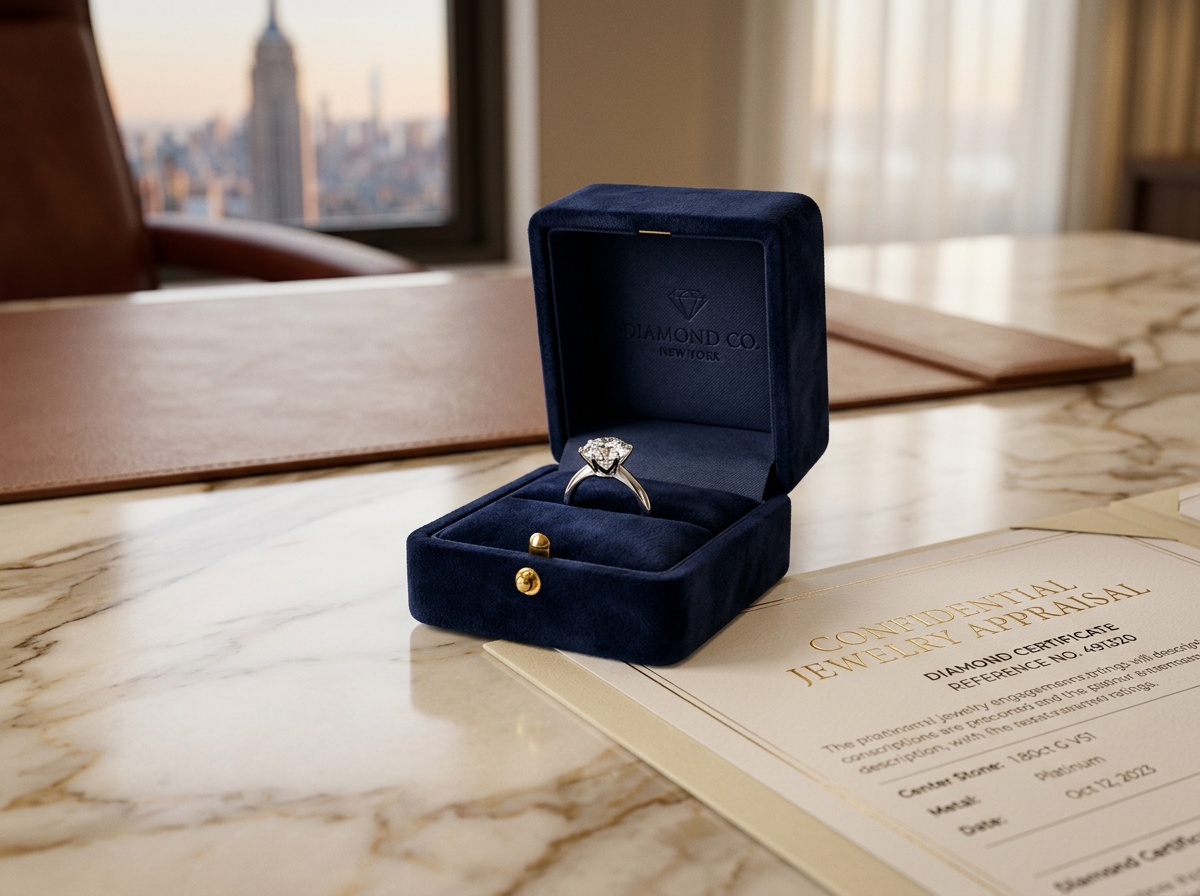
Confidential diamond engagement ring evaluation at Buyers of NYC Manhattan Diamond District office
Discretion & Client Privacy

Selling After a Broken Engagement, Divorce, Inheritance or Other Life Change

Whether you are moving on from a broken engagement, navigating a divorce settlement, dividing an estate, or liquidating an inherited family heirloom, Buyers of NYC provides a private, compassionate, and pressure-free environment. We never ask personal questions or require justification for your sale; our sole focus is delivering a transparent, highly objective diamond evaluation based on verified metal purity, 4Cs characteristics, and live global secondary-market benchmarks.

Respectful, Objective Evaluation

We treat every transaction with utmost dignity and professional neutrality. We focus exclusively on verifying metal fineness, diamond 4Cs, and market economics—never on personal background.

Confidential Compliance In-Person

Online inquiries remain strictly non-intrusive. If legal documentation is required for estate or power-of-attorney settlement, it is reviewed privately in-person at our Diamond District office.


Channel Comparison

What Are the Main Ways to Sell or Liquidate an Engagement Ring?

Ensure maximum financial return, immediate settlement speed, and counterparty security when liquidating your fine engagement ring or bridal jewelry:

Retail Jeweler Trade-In

Store Credit Focus • Retail Margins
Potential Advantages

Convenient if you are purchasing a replacement piece and prefer store credit rather than cash liquidity.

Risks & Questions to Ask

Is value offered in cash or store credit? Are new retail inventory prices inflated to offset the trade-in allowance?

Auction House or Consignment

15% – 25% Fees • 60–120 Days Delay
Potential Advantages

Distinctive, rare, signed (Tiffany, Cartier), or important historical diamond rings that may benefit from broad collector marketing.

Risks & Questions to Ask

What are the total seller commissions, cataloging charges, reserve fees, and timeline before payment is guaranteed?

Private Peer-to-Peer Marketplace

Direct-to-Consumer • Payment Risks
Potential Advantages

May capture retail-adjacent gross pricing if connecting directly with an end buyer for a standard engagement ring.

Risks & Questions to Ask

Are you protected against fraudulent escrow, reversed payments, transit theft, meeting stranger safety risks, and buyer disputes?

Step-by-Step Guidance

What Happens During an Engagement Ring Evaluation?

Our five-step evaluation is conducted in-person at our Manhattan Diamond District office with complete transparency and zero obligation to sell.

Step 01

Share Basic Details

Share whether it is a solitaire, halo, vintage, or designer piece and share any available reports, receipts, appraisals, or brand packaging.

Step 02

Plan Your Visit

Visit Buyers of NYC at 36 W 47th Street, W07, in the Diamond District. Walk-ins are welcome; appointments guarantee immediate dedicated gemologist attention.

Step 03

Inspect Complete Ring

Our gemologists examine center and accent stones under 10× magnification, verify precious metal content on certified scales, and verify maker marks.

Step 04

Review Market Route

The ring is evaluated as a complete fine jewelry piece and by component values so that designer premiums, matched accents, and precious metals are fully captured.

Step 05

Receive & Settle Offer

You receive a transparent, itemized offer with zero obligation to sell. If accepted, immediate settlement is completed on the spot via wire, check, or cash.

Preparation Guide

How to Prepare an Engagement Ring

Do not alter, polish, clean aggressively or remove stones from the mounting.

Keep the Ring 100% Intact

Do not remove the center diamond, polish away historic hallmarks, or replace components prior to professional evaluation.

Keep Documents with the Ring

Keep grading reports (GIA, IGI), retail receipts, prior appraisals, brand certificates, boxes, and pouches with the matching piece.

Bring Matching Bands Together

Bring matching wedding bands, diamond enhancers, guard rings, and jackets together for complete-set bridal valuation.

Do Not Polish or Clean Aggressively

Avoid harsh chemical dips, ultrasonic steam baths, or removing engravings that could affect metal weight or vintage integrity.

Photograph Carefully

Photograph the ring and paperwork for your records before traveling, keeping certificate numbers private from public channels.

Call Before Traveling with High-Value Lots

Call before bringing exceptional carat diamonds or multiple high-value rings. Use discreet transport and secure appointments.

Transparency Framework

Questions to Ask When Comparing Engagement Ring Offers

Ensure full transparency before finalizing any sale. Always ask buyers these core questions:

Q1

Origin & 4Cs Basis Applied

Are you evaluating the center stone as natural or lab-grown, and which 4Cs parameters are you using?

Q2

Center vs. Accent Stone Value

Are you valuing the center diamond and accent melee separately, or bundling them into a generic scrap rate?

Q3

Setting Metal & Net Payable Weight

How are you testing and calculating the payable gold karat or platinum weight after isolating stone weight?

Q4

Brand & Complete-Piece Equity

Are you factoring in designer signatures, vintage era, and complete-piece marketability rather than raw melt?

Q5

Condition & Repair Assumptions

How do minor wear, prong condition, or missing accent stones affect your purchase evaluation?

Q6

Fees, Deductions & Commissions

Are there appraisal fees, unsetting charges, refining commissions, or deducts from the final payout?

Q7

Payment Method & Speed

What payment method (wire, check, cash) and timing apply immediately upon agreement?

Q8

Preliminary vs. Written Offer

Is the quoted number a preliminary online range or an exact, guaranteed in-person purchase offer?

Our Team

Connect with Our Diamond Specialists

Visit our Manhattan Diamond District office to meet with our GIA-trained gemologists and experienced jewelry specialists for a private, no-obligation evaluation.

Savannah Nguyen

Head of Precious Metals

Cody Fisher

Head of Fine Jewelry

Leslie Alexander

Head of Watches

Jacob M.

Head of Diamonds & Precious Stones

FAQ

Frequently Asked Questions About Selling an Engagement Ring

Can I sell an engagement ring without a grading report?

Yes. A report can provide useful specifications, but it is not always required for an initial purchase evaluation. The mounted diamond and setting may still be reviewed, subject to the limitations of the mounting.

Do you consider laboratory-grown diamond engagement rings?

Laboratory-grown diamond rings may be considered. Origin, report information, center-stone characteristics, treatment, setting, brand, condition and current marketability can all affect whether an offer is possible.

Should I remove the center diamond before selling the ring?

No. Bring the ring intact. Removing a diamond can damage the stone or setting and may eliminate useful evidence about the complete piece.

Does total carat weight mean the center stone weighs that amount?

Not necessarily. Total carat weight combines all diamonds in the ring. The center stone and each group of side stones should be considered separately.

Do you consider rings with missing stones or damaged settings?

Damaged and incomplete rings may still be reviewed. The evaluation may consider the principal stone, remaining accents, setting, brand, reusable components and recoverable metal.

Does the original box or receipt increase value?

It can support identity, provenance or completeness, especially for signed jewelry, but no fixed premium is guaranteed. The physical ring and current market remain central.

Is an insurance appraisal the same as resale value?

No. An insurance appraisal commonly addresses replacement for insurance purposes. A purchase offer addresses what a buyer may pay for the item under current market and transaction conditions.

Do you consider Tiffany, Cartier, Harry Winston or other signed engagement rings?

Signed rings may be reviewed. The signature, construction, documentation, condition, completeness and consistency with the claimed maker should be considered before any brand-related value is assumed.

Should I remove a personal engraving?

No. Do not alter the ring before the first evaluation. Removing an engraving can change the ring’s condition, weight, finish and originality.

Can I sell a ring after a divorce or broken engagement?

The business can review the ring, but ownership disputes are legal matters. Confirm that you own the item or have authority to sell it before beginning a transaction.

Do I need an appointment?

Appointments are preferred, but walk-ins are welcome during published weekday hours. Calling ahead is recommended for a large, signed, antique or document-heavy item.

Am I required to sell after the evaluation?

No. A purchase evaluation is free and no-obligation. You may review the offer and decide whether to accept or decline.

Start Your Evaluation

Visit Buyers of NYC in Manhattan’s Diamond District

Buyers of NYC is located at 36 W 47th Street, Booth W07, New York, NY 10036, in Manhattan’s Diamond District. Current published hours are Monday – Friday: 10:00 AM – 6:00 PM. Appointments are preferred and walk-ins are welcome during published hours.

Manhattan Office

36 W 47th Street, Booth W07
New York, NY 10036
(Between 5th & 6th Avenues)

Hours of Operation

Monday – Friday: 10:00 AM – 6:00 PM
Appointments preferred; walk-ins welcome

Direct Phone & Email

Phone: 646-400-4553
Email: buyersofnyc1@gmail.com

For high-value diamond rings (2ct+), vintage designer bridal pieces, or complete bridal sets, calling 646-400-4553 in advance reserves dedicated time with our senior diamond and bridal specialists.

Request an Engagement Ring Evaluation

Describe your engagement ring (center stone carat, diamond shape, metal, designer, and grading certificates) for an in-person evaluation.

Mounted Review Advisory: Mounted diamond grades and color assessments are preliminary estimations subject to the limitations of the setting. Physical in-person inspection is required for a final offer.

Reviewed by Buyers of NYC Bridal Diamond Evaluation Team Last reviewed August 2026 | Manhattan Diamond District