Bring minted, cast, sealed or loose gold bars to Buyers of NYC for a free, no-obligation purchase evaluation at our Manhattan Diamond District office. The team may review the bar’s stated weight, fineness, refiner or mint, markings, packaging, condition and current marketability before deciding whether to present an offer.
A photograph or description can help with appointment planning, but it does not establish authenticity, condition, fine-gold content or a final purchase offer. Have a kilogram bar, multiple bars or another large holding? Call 646-400-4553 before transport.
The bar may state a gram, troy-ounce or kilogram weight. The physical item should be reviewed for consistency with the stated specification.
Gold bars commonly use parts-per-thousand expressions such as 999, 999.9 or 995. The exact mark and product context matter.
A recognized producer can affect market familiarity, but the name alone does not prove authenticity or guarantee a premium.
Original sealed packaging may support identification. It is not a government guarantee or conclusive authentication.
Gold bars are produced in many sizes and formats. Buyers of NYC may consider individual bars, multiples and collections, subject to physical inspection and current purchasing needs.
Precisely finished gram, fractional-ounce and ounce-format bars, often with detailed markings
Weight, fineness, refiner, dimensions, serial, packaging, condition and market recognition
Bars formed by casting molten metal, including traditional or hand-poured appearances
Weight, fineness, stamps, physical consistency, refiner, condition and verification
Minted bars enclosed in branded packaging with stated specifications
Package integrity, matching identifiers, stated specifications and physical consistency
Bars without original card, capsule or packaging
The absence of packaging does not automatically disqualify the bar; physical review becomes especially important
1 g, 2.5 g, 5 g, 10 g, 20 g, 50 g and other small formats
Product recognition, packaging, quantity, verification and transaction efficiency
1 oz, 10 oz, 100 g, 250 g, 500 g, 1 kg and other marked formats
Fine-gold content, product route, condition, documentation and marketability
Older refinery, bank-branded or discontinued products
Collector interest may exist but is not automatic; provenance, rarity, condition and demand matter
Substantial bars that may require advance planning
Call before transport; acceptance, handling and verification procedures must be confirmed
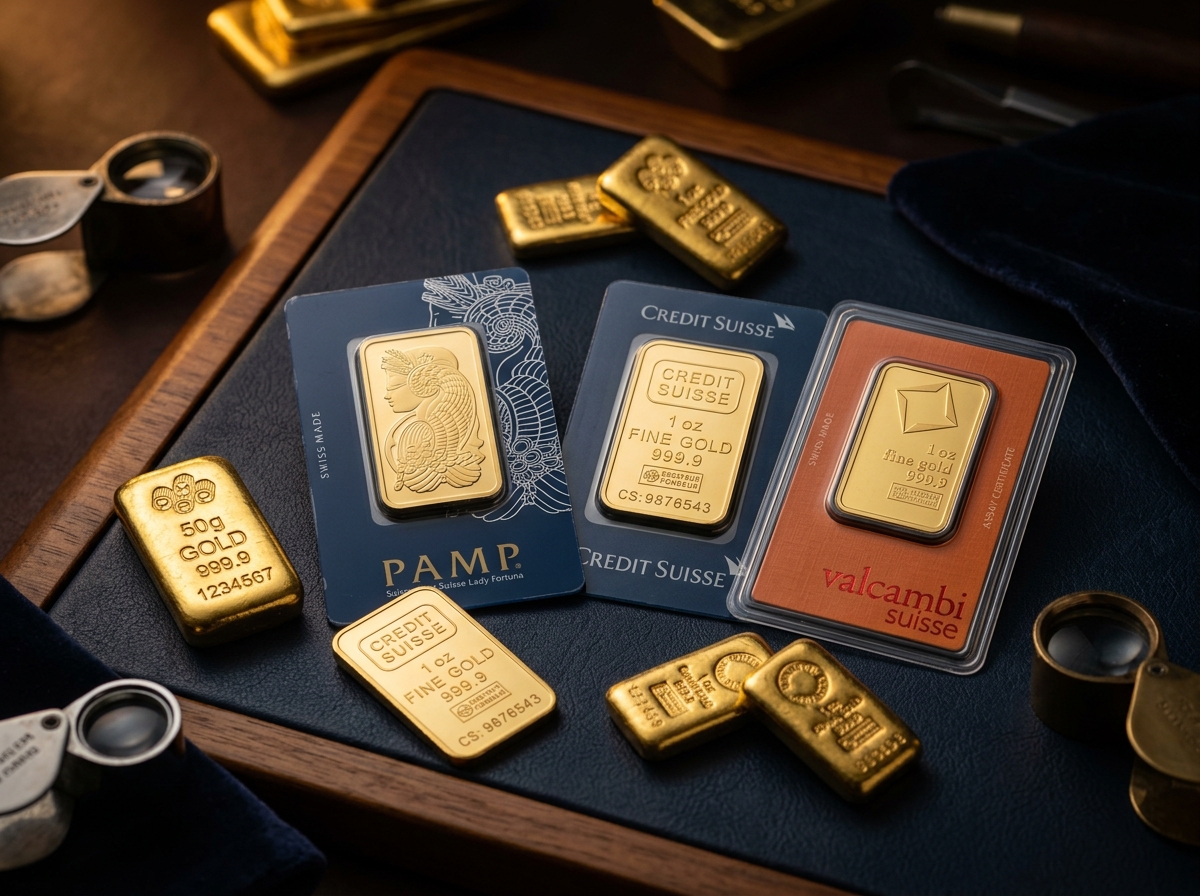
Representative names customers may encounter include PAMP, Valcambi, Argor-Heraeus, Metalor, Heraeus, Royal Canadian Mint, Perth Mint, Asahi, Johnson Matthey, Engelhard, Credit Suisse, UBS, Sunshine Minting and Scottsdale Mint. The list is illustrative, not exhaustive, and does not imply affiliation or automatic acceptance.
The distinction matters because recognized products, government issues, collectible coins and privately produced rounds can follow different markets even when they contain comparable amounts of gold.
A precious-metal product formed in a bar, wafer or ingot shape and marked with stated specifications.
A monetary object issued under governmental authority, often with a denomination.
A privately produced coin-shaped bullion product that is not legal tender.
A professional purchase evaluation should consider several factors together rather than relying on one stamp or package:
The bar may state a gram, troy-ounce or kilogram weight. The physical item should be reviewed for consistency with the stated specification across calibrated scales.
Gold bars commonly use parts-per-thousand expressions such as 999, 999.9 or 995. The exact mark and product context matter when assessing pure gold content.
A recognized producer can affect market familiarity, but the name alone does not prove authenticity or guarantee a premium in secondary market channels.
Serials, logos, assay marks, weight and fineness can help establish what the bar purports to be. They should be reviewed as a group together.
Original sealed packaging may support identification and product completeness. Damaged or missing packaging does not automatically determine the outcome.
Size, shape, edge, surface and weight relationships may be relevant to comparison with known specifications and official mint tolerances.
Cuts, drilling, filing, solder, opened packages, replaced cards or mismatched identifiers may require additional review during evaluation.
The bar’s product type, quantity and potential resale or recovery route can affect how a buyer considers it against live market benchmark spreads.

Fineness describes the proportion of pure gold in parts per thousand. A bar marked 999.9 contains 999.9 parts pure gold per 1,000 parts, while a 995 bar meets a 99.5% standard.
Many small minted bars are sold in sealed tamper-evident blister cards containing stated specifications. Original packaging supports identification and protects surface finishes, but is not a substitute for physical verification.
Usually, do not open, cut or damage packaging solely to prepare for a sale. Original packaging is part of the product’s completeness. If the package is already damaged or open, keep all pieces together and disclose the condition.
A London Good Delivery gold bar is a large wholesale bar (350 to 430 fine troy oz / ~10.9 to 13.4 kg), not the standard 1-ounce or gram bar sold to retail investors.
Verification should use multiple pieces of evidence. Depending on the item and confirmed professional procedures, a physical review considers:
Weight and dimensions compared directly with known refinery specifications and mint tolerances.
Fineness, refiner, serial, assay and hallmark stamps inspected as a complete, coherent group.
Packaging condition and whether stated blister identifiers and bar serials match perfectly.
Surface, edges, shape, finish texture and signs of tampering, drilling, filing or alteration.
Original purchase invoices, refinery certificates, and provenance records when available.
Appropriate non-destructive electromagnetic and ultrasound procedures verified for gold bars.
A published gold price is a market reference benchmark, not a guaranteed consumer purchase price. Gold prices fluctuate throughout the day, and the applicable reference should always be identified by source, unit and timestamp.
An item-specific offer reflects the following 8 fundamental commercial and metallurgical factors:
How fine-gold content, brand tier, condition, and market liquidity shape the final purchase offer:
The exact net weight of tested pure fine gold (grams, troy ounces, or kilograms) contained within the bar, verified on calibrated scales.
Whether the bar is a widely recognized, highly liquid retail bullion product (PAMP, Valcambi, Credit Suisse, Royal Canadian Mint).
Minted wafers in tamper-evident blister packaging versus traditional poured ingots, along with the total quantity in the lot.
The specialized non-destructive testing procedures (XRF, ultrasonic, specific gravity) required to confirm internal metal density.
Pristine mirror mint finish versus bars showing cuts, drill marks, filing, solder residue, or package tampering.
Whether the item is best positioned for direct secondary bullion placement or batch commercial refinery recovery.
Administrative compliance, secure vault transport, armored logistics, and transaction settlement requirements.
Current buyer inventory levels, prevailing wholesale trading spreads, and immediate institutional purchasing needs.
Compare the primary gold bar selling channels by speed, return, deductions, and transaction security before deciding how to proceed:
In-person physical evaluation at 36 W 47th Street, immediate definitive purchase offer explaining live gold-price benchmarks, fine gold weight metrology, and recognized refiner premiums, with guaranteed same-day payment and zero fees or transit risks.
Which gold-price reference (LBMA / COMEX) and timestamp are used? Are stated weight, verified bar weight, or fine-gold content applied? Is the quote a preliminary indication or a binding offer?
Appears straightforward when a dealer advertises an upfront percentage quote of current market gold spot price.
Which gold-price reference and timestamp are applied, which weight and fineness basis are used, and whether unstated melting, assay, or refining charges are deducted.
Enables remote selling from home if local Manhattan Diamond District precious metal buyers are inaccessible.
Photographs cannot establish authenticity or fine-gold content. Who covers declared transit insurance, what is the return policy, and are quotes binding offers?
Can suit rare vintage poured ingots, historic assay bars, or significant numismatic bullion lots with collector interest.
What are the seller commissions (15%–30%), cataloguing fees, storage and insurance charges, reserve limits, and post-sale settlement timelines?
May preserve underlying gold bar ownership when temporary short-term liquidity is needed from a licensed collateral lender.
What are the monthly interest rates, vault storage fees, default grace periods, and redemption procedures under state lending rules?
Use discreet, appropriate transport and do not leave valuables unattended in a vehicle.
Provide the bar format, stated weight, fineness, refiner or mint, packaging condition, quantity and any documentation. For privacy, provide only a masked serial or the last four characters through the public form.
Visit Buyers of NYC at 36 W 47th Street, W07, New York, NY 10036. Appointments are preferred. Call before bringing multiple bars, a kilogram bar or another substantial holding.
The team may review the bar’s weight, dimensions, markings, packaging, condition, documentation and physical consistency using procedures appropriate to the item.
The team may consider the verified fine-gold content, recognized-product market, condition, quantity and current market reference.
If Buyers of NYC wishes to purchase the bar, it may present an offer. You may ask how the principal factors were applied and accept or decline without obligation. Identification, ownership and transaction-record requirements may apply.
Do not scratch, drill, file, cut, melt or acid-test a bar.
Leave intact packaging closed unless it is already open or damaged.
Keep assay cards, capsules, receipts, invoices and purchase records with the matching bar.
Do not publish or casually transmit a complete serial number.
Photograph the front, back, edges and packaging without exposing sensitive personal information.
Keep bars organized by refiner, weight and package status.
Call before transporting a large quantity or heavy bar. Use discreet transport and do not leave valuables unattended in a vehicle.
Ensure full transparency before finalizing any sale. Always ask buyers these core questions:
Which gold-price reference and timestamp are you using?
Are you calculating from stated weight, verified bar weight or fine-gold content?
Which fineness are you applying?
Are you treating the bar as a recognized product or only as recoverable metal?
How do the refiner, package, serial and condition affect your evaluation?
Are there fees, deductions, commissions, shipping costs or return costs?
What payment method and timing apply after identification and transaction requirements are completed?
Is the quoted number a preliminary indication or a final written purchase offer?
A team of buyers reviews eligible minted, cast, sealed and loose gold bars at our Manhattan Diamond District office. Named testing instruments and refinery relationships are omitted until verified.

Head of Precious Metals

Head of Fine Jewelry

Head of Watches

Head of Diamonds & Precious Stones
A missing card or package does not automatically disqualify a bar. The team may still review the physical bar, its markings, weight, dimensions, condition and other available evidence.
No. Original packaging can support identification and completeness, but packaging, labels and identifiers can be copied, damaged or mismatched. The physical bar still requires appropriate review.
Do not open or damage an intact package solely for an evaluation. Bring the bar as found and allow the evaluating team to explain any next step.
Keep the damaged package and bar together. Disclose tears, separation, missing sections or mismatched identifiers; damaged packaging does not by itself determine whether the bar can be considered.
Small minted or cast bars may be considered. The product, quantity, packaging, verification requirements and current purchasing needs can affect the process.
The team may consider a range of formats. Call before bringing a kilogram bar, multiple bars or another large holding so the visit can be planned.
No. LBMA lists qualifying refiners, while a London Good Delivery gold bar is a particular large wholesale-format bar meeting specified weight, fineness and marking requirements. A small bar from a listed refiner is not automatically a Good Delivery bar.
No. Some vintage or discontinued bars may attract collector interest, but age or branding alone does not guarantee a premium. Rarity, condition, provenance and current demand matter.
Photographs can help identify the apparent product and plan an appointment. They cannot establish final authenticity, weight, condition, fine-gold content or a binding offer.
Avoid destructive or hazardous home tests. Scratching, filing, drilling, melting or chemical testing can damage the product and create safety risks.
Bring the assay card, receipt, invoice, purchase record, original package and any relevant inventory or provenance information you already have. Documents can support the review but do not replace the physical bar.
No. The purchase evaluation is free and carries no obligation to accept an offer.
No. A gold bar or ingot is formed in a bar, wafer or ingot shape. A gold coin is issued under governmental authority. A gold round is a privately produced coin-shaped bullion product that is not legal tender.
Buyers of NYC is located at 36 W 47th Street, Booth W07, New York, NY 10036, in Manhattan’s Diamond District. Current published hours are Monday – Friday: 10:00 AM – 6:00 PM. Appointments are preferred and walk-ins are welcome during published hours.
36 W 47th Street, Booth W07
New York, NY 10036
(Between 5th & 6th Avenues)
Monday – Friday: 10:00 AM – 6:00 PM
Appointments preferred; walk-ins welcome
Phone: 646-400-4553
Email: buyersofnyc1@gmail.com
For multiple gold bars, a kilogram bar, or substantial bullion holdings, calling 646-400-4553 in advance reserves dedicated time with our senior gold bullion specialists.
Describe your gold bars, stated weight (grams, ounces, kilos), refiner or mint, format (minted or cast), and assay packaging.
Serial Privacy Advisory: Keep complete, unmasked serial numbers confidential. For online inquiries, provide only the last 4 digits (e.g., ***1234). Online submissions are preliminary and do not create an obligation to sell.