
36 W 47th St, Booth W07, New York, NY 10036Mon–Fri: 10:00 AM – 6:00 PM
36 W 47th St, Booth W07, Diamond District
Mon–Fri: 10:00 AM – 6:00 PM (Walk-ins Welcome)
Licensed NYC Buyer • Free Precision Appraisal
SILVER · BULLION BARS

Sell Silver Bars in NYC

Buyers of NYC considers minted, cast, poured, sealed, loose, vintage, and larger-format silver bars for possible purchase at its Manhattan Diamond District office. A silver bar evaluation may consider stated weight, fineness, producer, markings, dimensions, packaging, condition, quantity, authenticity risk, and current marketability.

The review is free and carries no obligation to accept an offer. Call before transporting multiple bars, a kilogram or 100-ounce bar, an approximately 1,000-ounce wholesale bar, or material with damaged or unusual packaging.
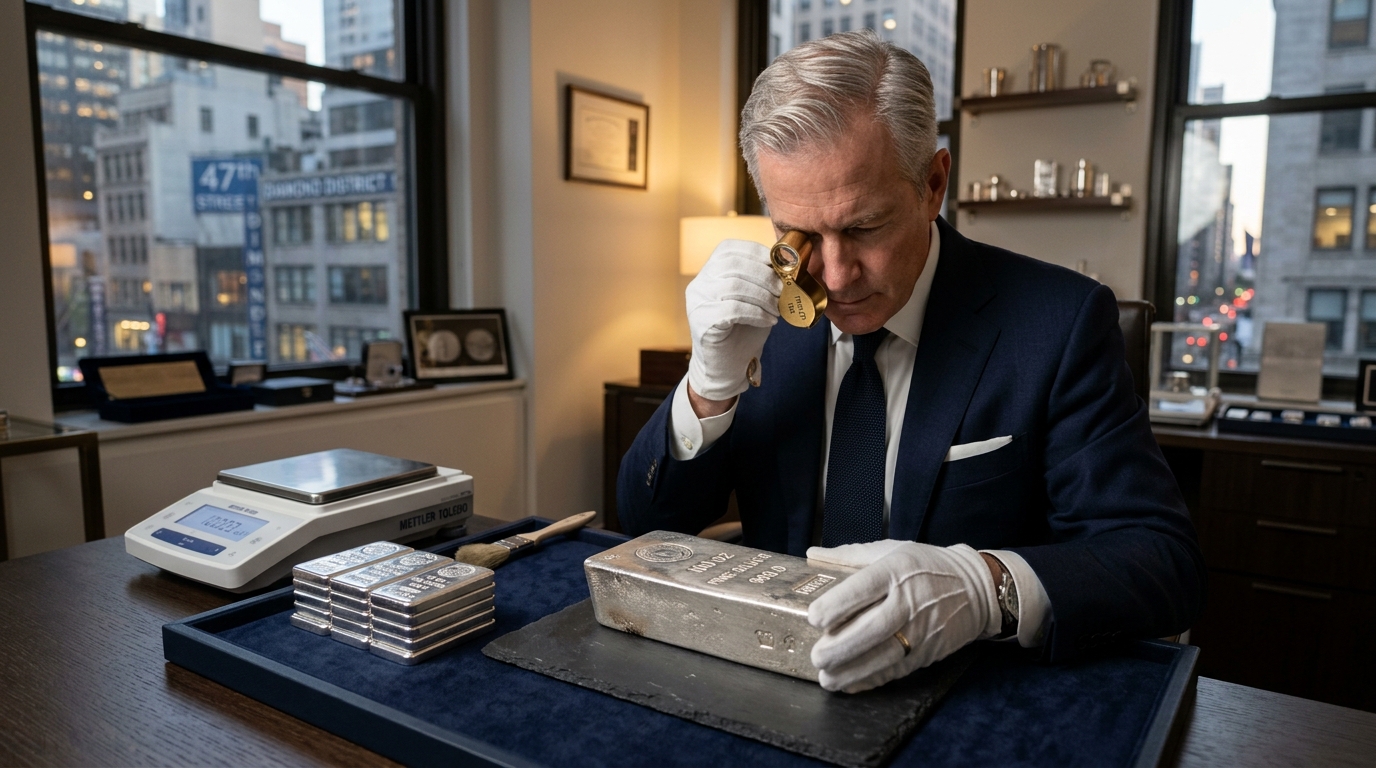

Precious metals expert evaluating 100 oz poured silver bullion bar and 10 oz minted silver bars with loupe and precision scale in Manhattan office
LICENSED & CERTIFIED IN NEW YORK CITY

Recognized Credentials, Industry Licenses & Certified Gemologists

FREE & CONFIDENTIAL EVALUATION

What to Expect When You Sell Silver Bars

No Obligation Required

Requesting a purchase evaluation does not commit you to selling. Review any offer and decide freely. The evaluation is always free.

Beyond Stated Weight

Bars are evaluated by producer, markings, dimensions, packaging, condition, authenticity risk, and quantity—not only stated fine-silver content.

Manhattan Office Review

In-person evaluation at 36 W 47th Street, W07. Call first for multiple, heavy, or large-format bars to plan the visit.

Vintage Bars Screened

Older or discontinued bars are screened for possible collector interest before any metal-only route is considered.

Category Directory

What Types of Silver Bars Does Buyers of NYC Consider?

Buyers of NYC reviews many common silver bar formats. Representative producer names may include Royal Canadian Mint, Perth Mint, PAMP, Valcambi, Heraeus, Metalor, Argor-Heraeus, Asahi, Sunshine Minting, Scottsdale Mint, Engelhard, Johnson Matthey, and others. This list is illustrative, not exhaustive.
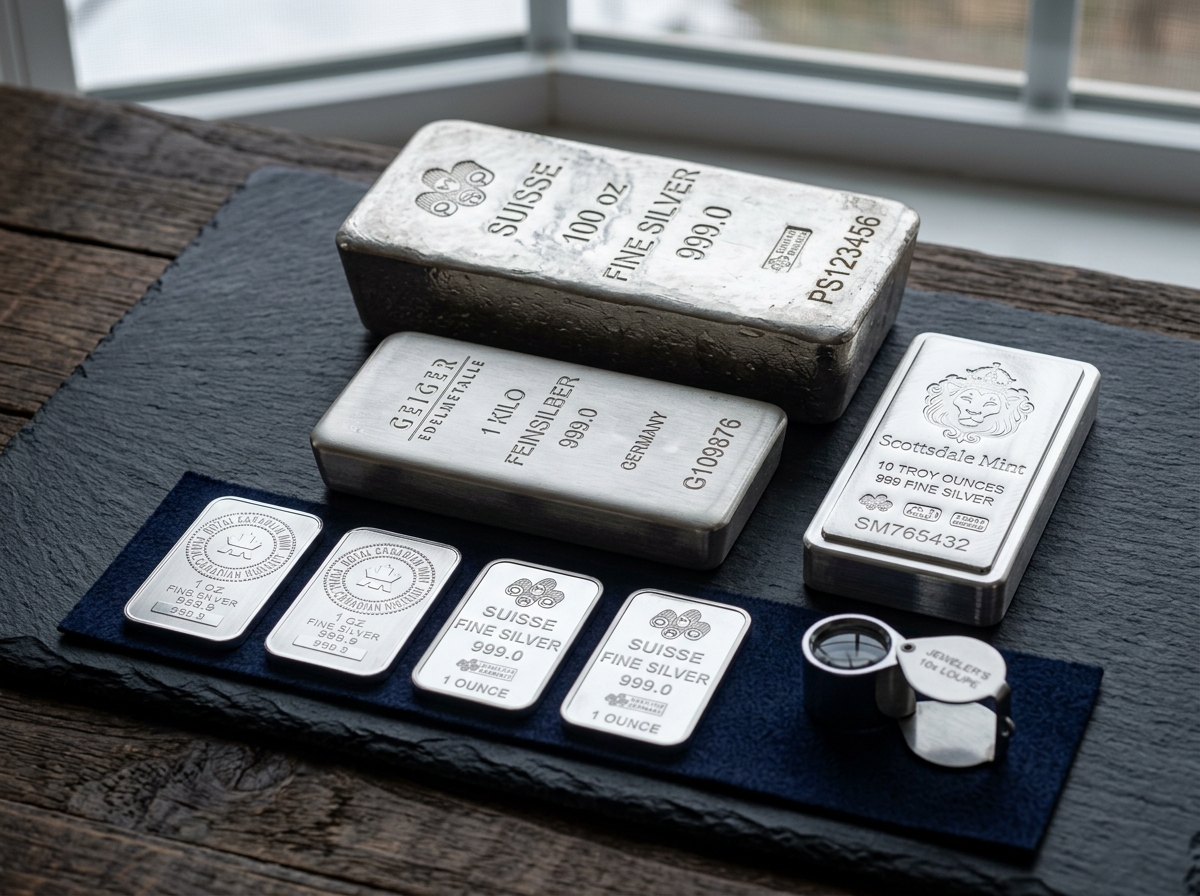
100 oz poured silver bar, 1 kilo bar, 10 oz Scottsdale bar, and 1 oz minted bars on jeweler desk in Manhattan
Bullion Evaluation Scope

Minted, Cast, Kilo & 100-Ounce Silver Bars

01

Minted Retail Bars

Minted Format
Representative Examples

1 oz, 5 oz, 10 oz, 20 oz, fractional, and precisely formed bars with sharp refinery strikes.

Evaluation Considerations

Weight, verified .999+ fineness, producer recognition, dimensions, packaging, and condition.

Request Evaluation
02

Cast & Poured Bars

Cast / Ingot
Representative Examples

Loaf, ingot, open-mold, hand-poured, and traditional rough-surface bullion formats.

Evaluation Considerations

Weight, fineness stamps, physical surface consistency, refiner, condition, and verification.

Request Evaluation
03

Kilo Bars

32.15 Troy Oz
Representative Examples

One-kilogram (1,000 gram / 32.1507 troy oz) silver bars from global LBMA refiners.

Evaluation Considerations

Producer, assay packaging, serial/batch marks, physical condition, quantity, and verification.

Call First / Review
04

50 oz & 100 oz Bars

Large Format
Representative Examples

Large-format commercial and institutional silver ingots (Engelhard, Johnson Matthey, RCM, PAMP).

Evaluation Considerations

Handling logistics, producer liquidity, marketability, physical condition, and advance planning.

Call First / Review
05

Sealed Assay-Card Bars

Assay Sealed
Representative Examples

Minted bars enclosed in tamper-evident refinery blister cards with stated purity and weight.

Evaluation Considerations

Card integrity, matching serial numbers, certifier recognition, and surface protection.

Request Evaluation
06

Loose or Unsealed Bars

Unsealed
Representative Examples

Bars without original cards, capsules, or packaging presented as raw bullion.

Evaluation Considerations

Physical electronic review, weight verification, fineness, markings, and dimensions.

Request Evaluation
07

Vintage & Discontinued Bars

Collector Route
Representative Examples

Older refinery, mining-company, commercial, artistic, or scarce-variety silver ingots (Engelhard, JM).

Evaluation Considerations

Producer prestige, variety mintage, condition, collector demand, and verified provenance.

Request Evaluation
08

Multiple-Bar Holdings

Estate & Portfolios
Representative Examples

Matched sets, mixed refiners, monster boxes of 10 oz bars, and estate bullion accumulations.

Evaluation Considerations

Itemized inventory, volume pricing, transport logistics, and immediate settlement capability.

Schedule Review
Valuation Methodology

How May a Silver Bar Be Evaluated?

A silver bar evaluation begins by identifying the physical item, confirming its specifications, checking consistency against the stated producer, and reviewing packaging and condition before a valuation route is selected.
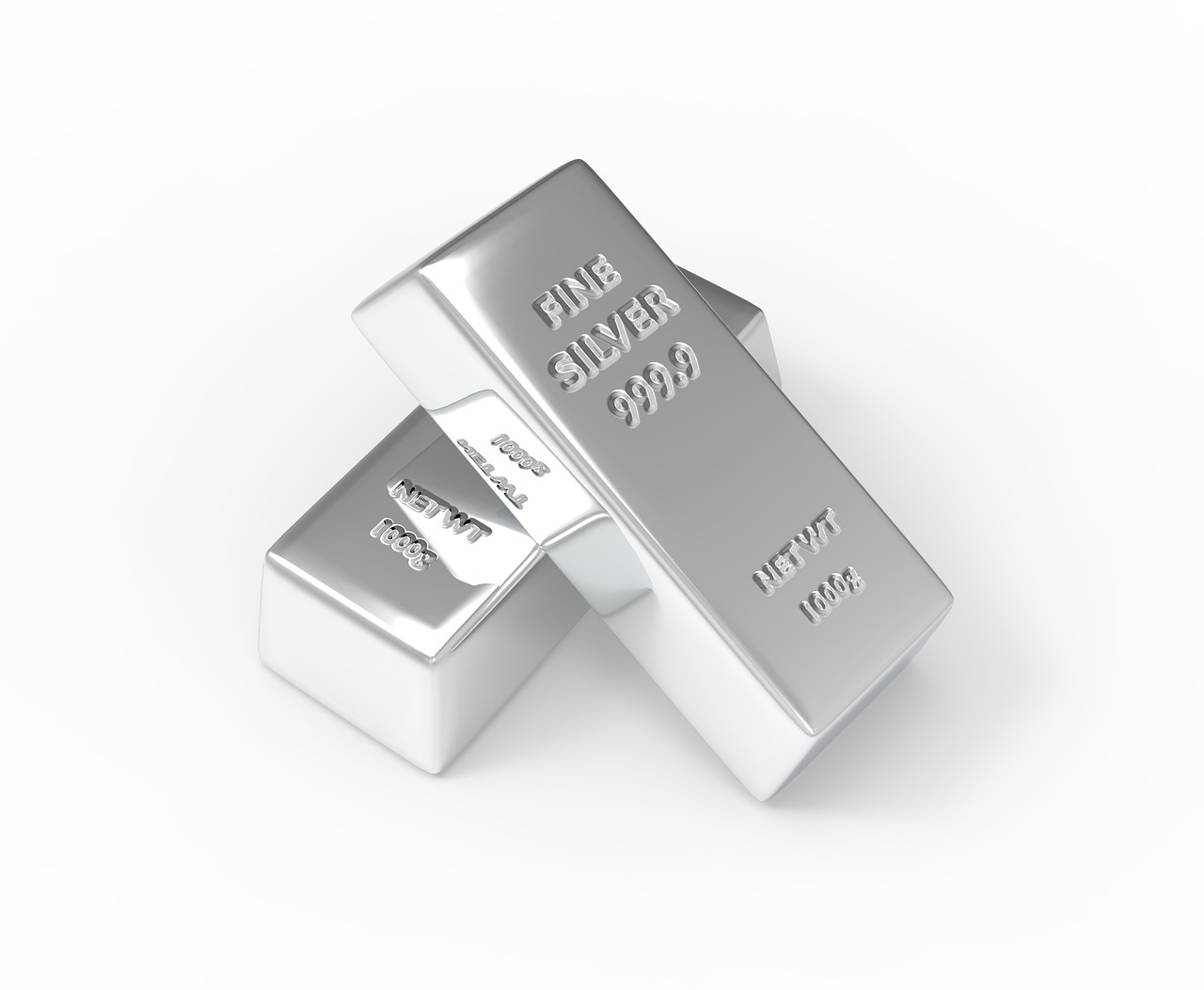
Silver bar weight and fineness evaluation at Buyers of NYC

1. Stated Weight and Actual Weight

Weight Precision

Common retail formats include 1 troy ounce, 5 troy ounces, 10 troy ounces, one kilogram, 50 troy ounces, and 100 troy ounces. Large wholesale bars can be approximately 1,000 troy ounces. A household ounce is not the same as a troy ounce.

Seller Guidance: Precious metals trade in troy ounces (31.103g), not standard household ounces (28.35g).

2. Fineness and Fine-Silver Content

Purity Standard

Many retail silver bars are marked 999 or 9999 fine, but markings are not treated as automatic proof. A bar confirmed at 100 troy ounces and .999 fineness would contain approximately 99.9 troy ounces of fine silver. This is an educational relationship, not a guaranteed purchase-price formula.
Seller Guidance: Stated .999 or .9999 fineness is confirmed non-destructively on calibrated electronic testing equipment.
Sealed assay-card silver bars and packaging for evaluation

3. Producer, Mint, and Product Recognition

Brand Recognition

A recognized producer can help identify the product and its usual specifications. The review may consider whether the bar’s markings, dimensions, finish, packaging, and other characteristics are consistent with the stated producer. A producer name or logo alone does not prove authenticity.

Seller Guidance: Recognizable refiners (Engelhard, Johnson Matthey, PAMP) carry established secondary market demand.

4. Serial, Batch, and Other Markings

Identifier Privacy

A bar may carry a serial number, batch number, weight, fineness, producer mark, assay information, or date. Use only a masked serial or last four characters for preliminary routing. Complete serials should not be placed into public forms or analytics.
Seller Guidance: Never submit complete serial numbers in public forms; share only masked identifiers or the last 4 digits.
Silver bar packaging, condition, and quantity review

5. Dimensions, Packaging, and Condition

Package Integrity

Length, width, thickness, edge shape, casting texture, and packaging fit provide context. Sealed packaging can preserve completeness. Scratched cards, split seams, toning, milk spots, or dents may affect marketability for some products but do not automatically eliminate metal value.

Seller Guidance: Keep bars in original sealed assay cards or capsules; do not open or break tamper-evident packaging.

6. Quantity and Current Marketability

Wholesale Liquidity

A single one-ounce bar, a matched set, a mixed producer lot, and a 100-ounce holding can require different handling and resale routes. Quantity, product recognition, available downstream demand, and transaction logistics can all influence the evaluation.


Seller Guidance: Larger lots and 100-oz bars are evaluated with immediate wholesale settlement based on real-time market depth.
PACKAGING RULE

Do Not Open Packaging Before Review

Do not remove a bar from original packaging solely to obtain an evaluation. Bring damaged, opened, or separated packaging with the bar rather than discarding it.

Do not glue, heat-seal, tape, or attempt to repair packaging before review. A sealed assay card does not automatically prove authenticity—it is one part of a layered review.

Product Identification

Silver Bar, Coin, or Round? Understanding the Difference

The shape alone is not enough to identify the product. Issuer, markings, denomination, weight, fineness, and product history help determine the correct category.

Bar-Specific Review Factors

What distinguishes bars from coins and rounds

Silver Bar or Ingot

This Page

A precious-metal product formed in a bar, wafer, cast, poured, or ingot shape. Evaluated for weight, fineness, producer, markings, packaging, and authenticity.

Key factors: Weight, fineness, producer, packaging integrity, and vintage interest.

LBMA Good Delivery Context

Wholesale Standard

LBMA Good Delivery silver bars are approximately 1,000 troy ounces with minimum 999.0 fineness. This wholesale standard should not be confused with ordinary retail bars.

Important: A refiner’s LBMA listing does not authenticate a particular customer-owned bar or guarantee an offer.

Vintage & Collectible Bars

Collector Route

Older Engelhard, Johnson Matthey, mining-company, refinery, or artistic bars may attract collector interest. Producer, age, variety, authenticity, condition, and actual market demand all matter.

No premium is automatic: Collector value requires documented variety, authenticity, and active buyer demand.

Serial Number Privacy

Protect Identifiers

Use only a masked serial or the last four characters during preliminary inquiry. Complete serials should not be placed into public web forms or ordinary analytics.

In the form: Enter only the last 4 characters of any serial number.

Coins & Rounds (Related Categories)

Different products with different evaluation routes

Silver Coins

Coins & Bullion Page

Monetary objects issued under governmental authority carrying a denomination or legal-tender status. Evaluated on metal content, date, mint, variety, grade, surface condition, and collector demand.

See: Coins & Bullion page for coin-specific evaluation information.

Silver Rounds

Coin-Shaped Bullion

Privately minted coin-shaped bullion products that are not legal tender. Evaluated for weight, fineness, producer, condition, and marketability.

See: Sell Silver page for rounds review alongside other silver forms.

Medals & Tokens

Case-by-Case

Commemorative or privately issued objects that may or may not contain silver. Issuer, markings, denomination, fineness, and product history help determine category and route.

Route: Review via Silver or Coins & Bullion depending on the item type.

Assay Card Limitations

Not Conclusive Proof

An assay card may help show what the producer states the bar to be and may preserve weight, fineness, serial, and product information—but packaging does not automatically prove that contents have not been substituted.

Approach: The physical bar, package, markings, dimensions, and available evidence are considered together.

Selling Channel Comparison

Comparing Ways to Sell Silver Bars in New York

A useful comparison requires understanding how each channel treats weight verification, producer recognition, packaging integrity, authenticity risk, and transaction logistics—not just the headline offer.

Coin Dealers & Bullion Shops

Compare Carefully
Potential Advantages

May pay competitive rates for recognized producers and popular retail bar formats, particularly if they maintain active bullion inventory.

Questions to Ask

What weight unit and fineness are used? How is packaging integrity treated? Was vintage or collector value considered? Are there any deductions for damaged assay cards or unsealed bars?

Online Precious Metal Platforms

Variable Risk
Potential Advantages

Broad market exposure and possible competitive offers for common retail-bar formats from recognized producers.

Questions to Ask

Who verifies authenticity after receiving the bar? What shipping, insurance, and return costs apply? Who bears the risk of disputed weight or fineness?

Auction Houses

Longer Timeline
Potential Advantages

May achieve above-spot results for rare vintage bars, mining-company ingots, or historically significant products with documented provenance and active collector demand.

Questions to Ask

What are buyer’s premium and seller’s commission? How long before settlement? Who covers insurance and handling? What happens if the bar does not sell?

Step-by-Step Guidance

The Silver-Bar Purchase-Evaluation Process

Use discreet, appropriate transport and do not leave valuables unattended in a vehicle.

Step 01

Share the Basic Details

Provide the bar format, stated weight, fineness, refiner or mint, packaging condition, quantity, and any documentation. For privacy, provide only a masked serial through the public form.

Step 02

Plan the In-Person Visit

Visit Buyers of NYC at 36 W 47th Street, W07, New York, NY 10036. Appointments are preferred. Call before bringing multiple bars, a kilogram bar, 100 oz bar, or substantial holding.

Step 03

Inspect the Physical Bar

The team reviews the bar’s weight, dimensions, refiner markings, packaging integrity, condition, and documentation using procedures appropriate to the product.

Step 04

Review the Market Route

The team considers verified fine-silver content, recognized-producer product market, packaging status, vintage interest, quantity, and current market reference.

Step 05

Review Any Offer

If Buyers of NYC wishes to purchase the bar, it presents an offer. You may ask how principal factors were applied and accept or decline without obligation.

Preparation Guide

How to Prepare Silver Bars

Do not scratch, drill, file, cut, polish, or chemically test a bar.

Keep Sealed Bars Sealed

Leave intact packaging, assay cards, and protective capsules closed unless already opened or damaged.

Keep Cards with the Correct Bar

Keep assay cards, certificates, receipts, invoices, and purchase records with the matching bar.

Mask Serial Numbers

Do not publish or casually transmit complete serial numbers through public forms.

Photograph Carefully

Photograph the front, back, edges, and packaging without exposing sensitive personal information.

Organize Multiple Bars

Keep bars organized by refiner, format (minted vs poured), weight, and package status.

Call Before a Heavy Lot

Call before transporting a large quantity, 100 oz bar, or 1 kilo bar. Use discreet transport.

Transparency Framework

Questions to Ask When Comparing Silver-Bar Offers

Ensure full transparency before finalizing any sale. Always ask buyers these core questions:

Q1

Silver-Price Reference & Timestamp

Which silver-price reference and timestamp are you using for the evaluation?

Q2

Weight Basis Applied

Are you calculating from stated weight, verified bar weight, or fine-silver content?

Q3

Applied Fineness Standard

Which fineness are you applying (.999 or .9999)? How are non-silver assay cards treated?

Q4

Product vs. Melt Route

Are you treating the bar as a recognized brand product or only as recoverable melt metal?

Q5

Refiner, Package & Condition

How do the refiner, original assay packaging, serial number, and condition affect your evaluation?

Q6

Fees, Deductions & Commissions

Are there fees, deductions, commissions, shipping costs, or delayed payment terms?

Our Team

Connect with Our Experts

A team of buyers reviews eligible minted, cast, sealed and loose silver bars at our Manhattan Diamond District office. Named testing instruments and refinery relationships are omitted until verified.

Savannah Nguyen

Head of Precious Metals

Cody Fisher

Head of Fine Jewelry

Leslie Alexander

Head of Watches

Jacob M.

Head of Diamonds & Precious Stones

FAQ

Frequently Asked Questions About Selling Silver Bars

Do you buy silver bars without original packaging?

Loose or unsealed bars may still be considered. The absence of packaging can affect completeness and may require more physical review, but it does not automatically eliminate the bar’s silver content or marketability.

Do you buy damaged or tarnished silver bars?

Surface marks, toning, milk spots, dents, and damaged packaging may affect product marketability, but they do not automatically eliminate metal value. Do not polish or chemically clean the bar before evaluation.

Does a sealed assay card guarantee authenticity?

No. Packaging and matching information can support identification, but they are only part of a layered review. The bar, package, markings, dimensions, condition, and producer information must be considered together.

Do you buy kilo and 100-ounce silver bars?

These formats may be considered, but call before transporting them so the team can confirm current scope, appointment timing, handling, and transaction requirements.

Does an LBMA-listed refiner make every bar Good Delivery?

No. Good Delivery applies to qualifying refiners and bars that meet the applicable wholesale specifications. Smaller retail bars made by a listed refiner are not automatically London Good Delivery bars.

Do vintage silver bars receive a premium?

Some vintage products may attract collector interest, but a premium is never automatic. Producer, variety, age, authenticity, condition, provenance, and actual buyer demand must be considered.

Should I open the package so the bar can be tested?

Do not open original packaging solely for a preliminary inquiry. Bring the bar in its current state. The team can determine what review is appropriate after seeing the product and packaging.

Can photographs produce a final silver bar offer?

Photographs can help identify the likely product and prepare for an appointment. They cannot conclusively establish weight, fineness, authenticity, internal consistency, package integrity, or a binding final offer.

Am I required to sell after the evaluation?

No. The purchase evaluation is free and carries no obligation to accept an offer. If Buyers of NYC wishes to purchase the bar, you may review the proposed terms and decide whether to proceed.

Start Your Evaluation

Visit Buyers of NYC in Manhattan’s Diamond District

Buyers of NYC is located at 36 W 47th Street, Booth W07, New York, NY 10036, in Manhattan’s Diamond District. Current published hours are Monday – Friday: 10:00 AM – 6:00 PM. Appointments are preferred and walk-ins are welcome during published hours.

Manhattan Office

36 W 47th Street, Booth W07
New York, NY 10036
(Between 5th & 6th Avenues)

Hours of Operation

Monday – Friday: 10:00 AM – 6:00 PM
Appointments preferred; walk-ins welcome

Direct Phone & Email

Phone: 646-400-4553
Email: buyersofnyc1@gmail.com

For multiple silver bars, 100-ounce bars, or high-volume bullion holdings, calling 646-400-4553 in advance reserves dedicated time with our senior silver bullion specialists.

Request a Silver Bar Evaluation

Describe your silver bars, stated weight (1 oz, 10 oz, 100 oz, Kilo, 1000 oz), refiner/mint, format (minted or cast), and packaging.

Serial Privacy Advisory: Keep complete, unmasked serial numbers confidential. For online inquiries, provide only the last 4 digits (e.g., ***1234). Online submissions are preliminary and do not create an obligation to sell.

Reviewed by Buyers of NYC Silver Bullion Evaluation Team Last reviewed August 2026 | Manhattan Diamond District