36 W 47th St, Booth W07, New York, NY 10036Mon–Fri: 10:00 AM – 6:00 PM
36 W 47th St, Booth W07, Diamond District
Mon–Fri: 10:00 AM – 6:00 PM (Walk-ins Welcome)
Licensed NYC Buyer • Free Precision Appraisal
MANHATTAN DIAMOND DISTRICT • DIAMOND EARRING BUYERS

Sell Diamond Earrings in NYC

Buyers of NYC considers diamond stud earrings, hoops, drops, clusters, huggies, jackets, antique and designer earrings, matched pairs, mismatched pairs and single earrings. Natural and laboratory-grown diamonds may be reviewed, with or without laboratory reports. Visit our Manhattan Diamond District office for a free, no-obligation purchase evaluation.

Diamond earrings should be reviewed both as jewelry and as one or more individual diamonds. The pair’s matching, total and per-stone weight, design, metal, backs, condition, brand, documentation and current marketability may all affect the most appropriate valuation route.


Diamond earrings prepared for evaluation in Manhattan Diamond District
LICENSED & CERTIFIED IN NEW YORK CITY

Recognized Credentials, Industry Licenses & Certified Gemologists

FREE & CONFIDENTIAL EVALUATION

Why Sellers Choose Buyers of NYC for Diamond Earring Purchases

GIA-Trained Gemologists

Every earring is reviewed in-person by certified gemologists using professional diamond grading microscopes, calipers, and electronic balances.

Complete-Piece Evaluation

We assess both principal diamonds, matching quality, platinum/gold mountings, posts, backs, and designer signatures together.

Pairs & Single Studs

We actively review matched pairs, mismatched pairs, damaged settings, and single diamond studs with lost mates in a private Midtown office.

Immediate Settlement

Receive a transparent, no-obligation purchase offer with immediate payment via same-day wire transfer, company check, or cash upon acceptance.

Category Directory

What Types of Diamond Earrings Does Buyers of NYC Consider?

The team may review one earring, a complete pair, multiple pairs or an inherited jewelry collection. Acceptance and any offer depend on the actual item, the diamonds, the setting and current marketability.

Diamond earring styles and formats evaluated at Buyers of NYC
Physical Authentication

Diamond Studs, Hoops, Drops & Signed Suites

01

Diamond Stud Earrings

Solitaire Studs
Representative examples

Four-prong, three-prong martini, bezel-set, halo, basket, and antique old European-cut diamond studs

Evaluation considerations

Individual diamond 4Cs quality, millimeter diameter matching, prong security, and platinum or gold basket weight

Request a Diamond Earring Evaluation
02

Hoop & Huggie Earrings

Hoops & Huggies
Representative examples

Inside-out diamond hoops, micro-pavé hoops, channel-set eternity hoops, and hinged huggies

Evaluation considerations

Total diamond weight, lock/hinge integrity, diamond alignment across the curves, and precious metal fineness

Request a Diamond Earring Evaluation
03

Drop & Dangle Earrings

Articulated Drops
Representative examples

Solitaire drops, articulated linear drops, diamond chandeliers, and detachable pendant drops

Evaluation considerations

Graduated diamond layout, flexible joint movement, prong wear, and finished estate market appeal

Request a Diamond Earring Evaluation
04

Cluster & Multi-Stone Earrings

Cluster & Multi
Representative examples

Floral diamond clusters, target designs, geometric patterns, and mixed-shape diamond sets

Evaluation considerations

Total carat weight distribution, melee clarity/color consistency, and setting craftsmanship

Request a Diamond Earring Evaluation
05

Earring Jackets & Enhancers

Jackets & Enhancers
Representative examples

Diamond stud jackets, halo enhancers, detachable drops, and interchangeable modular components

Evaluation considerations

Completeness of modular pieces, center fit diameter, and precious metal weight

Request a Diamond Earring Evaluation
06

Designer & Signed Earrings

Signed Designer
Representative examples

Cartier, Tiffany & Co., Van Cleef & Arpels, Harry Winston, Bulgari, David Webb, and Chopard suites

Evaluation considerations

Verified maker hallmarks, serial engravings, original boxes, documentation, and collector demand

Request a Diamond Earring Evaluation
07

Lab-Grown Diamond Earrings

Lab-Grown
Representative examples

CVD- or HPHT-grown diamond studs, hoops, and fashion earrings with IGI, GCAL, or GIA lab reports

Evaluation considerations

Stone quality, laboratory paperwork, pair matching, and precious metal mounting recovery

Request a Diamond Earring Evaluation
08

Single & Incomplete Sets

Single / Incomplete
Representative examples

Single studs with lost mates, earrings with bent posts, missing screw backs, or damaged baskets

Evaluation considerations

Standalone diamond 4Cs value, setting metal weight, and pendant repurposing yield

Request a Diamond Earring Evaluation

Representative makers and designers customers may present include Tiffany & Co., Cartier, Harry Winston, Van Cleef & Arpels, Graff, Bulgari, David Webb, Chopard, and custom Diamond District jewelers. The list is illustrative, not exhaustive, and does not imply affiliation or automatic acceptance.

Format & Market Guide

Diamond Studs, Statement Suites & Single Earrings

The distinction matters because matched solitaire studs, articulated designer drops, and solitary studs follow distinct secondary market dynamics even when crafted from identical precious metals.

Current Page

Diamond Stud Earrings

Product: Matched solitaire stud pair
Working Definition

A matched pair of solitaire diamonds set in four-prong, three-prong, or bezel mountings with friction or screw backs.

Where to Learn More: Evaluate Diamond Studs
Hoops & Drops

Hoops & Statement Drops

Product: Multi-stone, articulated or huggie pair
Working Definition

Multi-diamond hoop, huggie, chandelier, or linear drop earrings evaluated on total carat weight, articulated joints, and estate appeal.

Single & Damaged

Single & Incomplete Sets

Product: Solitary earring or broken component
Working Definition

A single diamond earring with a missing mate or damaged setting, evaluated for individual diamond 4Cs value and precious metal yield.

Where to Learn More: Sell Estate Jewelry Guide →
Valuation Methodology

How Are Diamond Earrings Evaluated?

The evaluation begins with the entire item: both earrings when a pair is available, all detachable components, the backs, documentation and packaging. The team can then consider the principal diamonds individually, the quality of the match, the jewelry construction and the most realistic market route.

Gemologist inspecting diamond stud earrings with 10x loupe

1. Natural, Laboratory-Grown or Simulant Stones

Material Origin

The diamonds should first be considered for origin and identity. Natural and laboratory-grown diamonds are separately disclosed products and follow distinct secondary markets. A simulant such as moissanite or CZ is not a diamond. Reports and inscriptions are helpful, but physical stones must be matched to records.

Seller Guidance: We test all stones with advanced spectroscopic instrumentation to confirm mined versus lab-grown origin.

2. Each Principal Diamond: 4Cs & Cut Proportions

Principal Stones

Each principal diamond is assessed for shape, measurements, estimated or reported carat weight, color, clarity, cut quality, polish, symmetry, fluorescence, treatments and condition. Fancy shapes require careful attention to proportions and face-up brilliance.

Seller Guidance: Round brilliants are evaluated on cut precision, while ovals, cushions, and pears are inspected for length-to-width ratios.
Digital caliper measuring matched diamond stud earrings

3. Matching Across the Pair: Outline, Diameter & Symmetry

Pair Symmetry

A pair is not evaluated only by adding two weights together. The team considers how closely the stones match in shape, outline, millimeter diameter, face-up size, color, clarity, cut appearance, fluorescence and visual presentation. Settings should also match in height and finish.

Seller Guidance: A well-matched pair is significantly more marketable than two unrelated diamonds of mismatched color or diameter.

4. Per-Stone Carat Weight vs. Total Carat Weight

Weight Distribution

Listings often describe earrings by total carat weight (tcw). A pair described as 2.00 tcw may contain approx. 1.00 ct in each principal stone, but the distribution can differ—especially in multi-stone, halo, cluster or graduated designs. Center stones and accent melee must be separated.
Seller Guidance: Bring original certificates or receipts so our team can verify individual diamond weights versus accent weights.
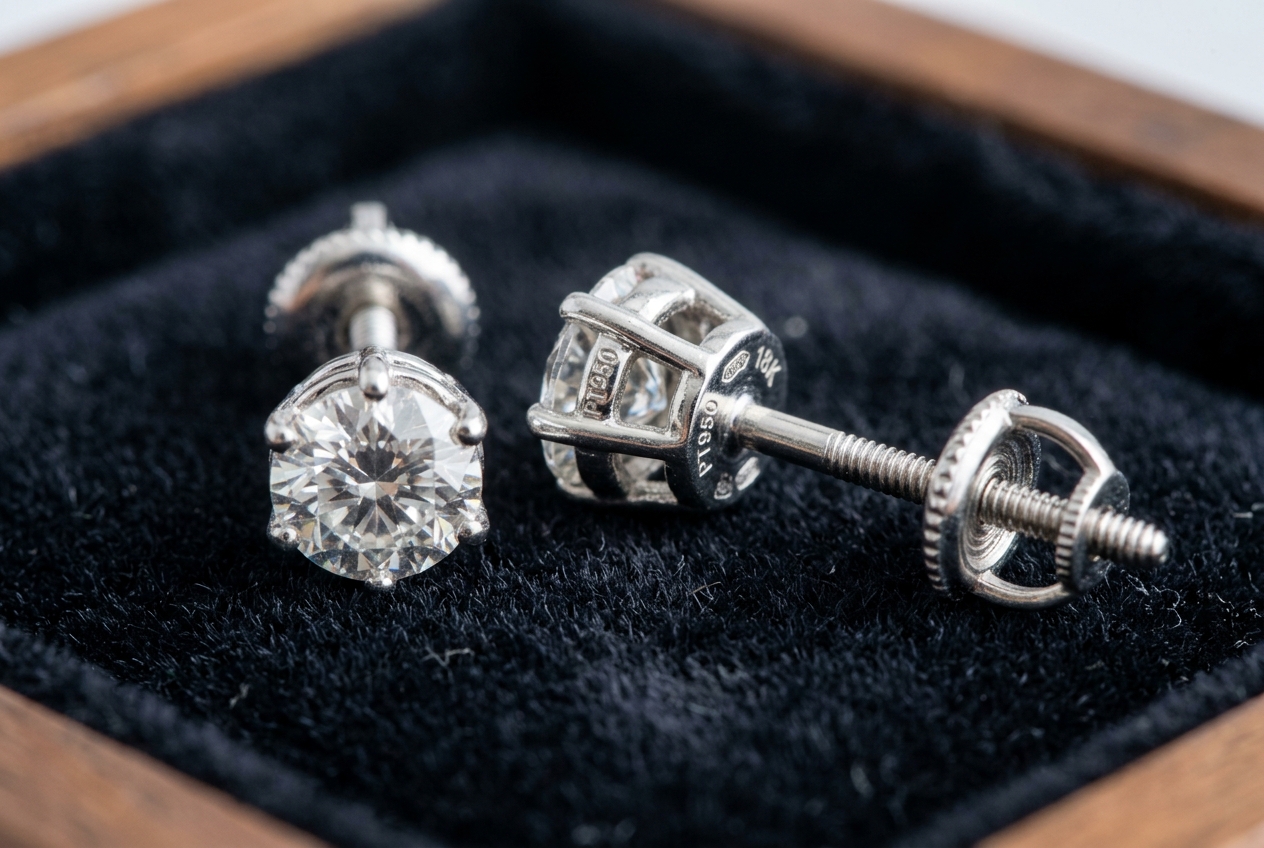
Platinum earring baskets, threaded screw posts and hallmarks

5. Settings, Metal and Construction

Mounting & Metal

The setting may be platinum (PT950), 18K/14K gold or palladium. The review includes prongs, bezels, baskets, halos, channels, hinges, clips, posts, solder, repairs and surface condition. Metal fineness hallmarks are verified using non-destructive XRF analysis.

Seller Guidance: Platinum and heavy gold baskets contribute substantial intrinsic precious metal value on top of diamond worth.

6. Posts, Backs, Clips and Detachable Components

Hardware & Backs

Friction backs, screw backs, locking Guardian backs, clip mechanisms, omega backs, jackets and detachable drops are part of the jewelry. Original or signed components support completeness, while missing backs can affect finished-piece marketability.

Seller Guidance: Do not buy replacement backs before evaluation. Bring every back, loose part, jacket, and drop you already have.
Vintage designer diamond chandelier earrings with certificate

7 & 8. Condition, Brand, Period & Design

Signature & Era

Signed earrings (Cartier, Tiffany, Van Cleef), antique designs, old European-cut diamonds, and distinctive craftsmanship warrant estate or collector screening. Condition checks evaluate bent posts, stripped threads, worn hinges, and missing melee.

Seller Guidance: Original branded boxes, pouches, and sales receipts can add significant collector provenance value.

9. Current Secondary-Market Demand

Market Liquidity

Original retail or insurance figures do not determine purchase offers. The team considers live wholesale demand for the principal diamonds, pair matching quality, style appeal, metal yield, condition, and likelihood of resale as a finished pair or individual stones.

Seller Guidance: Solitaire round brilliant and cushion studs maintain the highest continuous secondary liquidity.
Calculation Framework
MATHEMATICAL FORMULA

How Is Diamond Earring Value Calculated?

A diamond earring purchase offer reflects the combined market contribution of the principal diamonds, pair matching consistency, mounting metal, and brand/collector demand:

Principal Diamonds Each Stone 4Cs Wholesale Benchmark
+
Pair Matching Symmetry & Outline Visual Alignment
+
Settings & Metal Platinum / Gold Yield Baskets, Posts & Backs
+
Brand & Design Signature Equity Complete-Piece Premium
=
Total Purchase Offer Net Settlement Immediate Payout
Component Itemization Note: Every element is evaluated independently. Solitaire studs are valued on each stone’s 4Cs plus pair matching, while platinum baskets and screw backs are added to create your complete purchase offer.

Can Diamond Earrings Be Evaluated While Mounted?

Yes. Mounted review can help identify the style, number of stones, approximate measurements, total item weight, markings, condition and complete-piece potential.

Seller Guidance: Bring earrings intact. Settings can limit exact weight, color and clarity ranges, but Buyers of NYC clearly explains what is confirmed and what is estimated during your evaluation.

Per-Stone Carat Weight vs. Total Carat Weight (TCW)

A listing stating “2.00 Total Carat Weight (TCW)” means the pair totals 2.00 carats combined (approx. 1.00 ct per earring), not that each individual diamond weighs 2.00 carats.

Important Distinction: Two 1.00 ct solitaire studs have a vastly different secondary-market valuation profile than cluster earrings containing twenty 0.10 ct diamonds totaling 2.00 tcw.
Diamond Material Distinction

Natural, Laboratory-Grown and Simulant Earring Stones

The diamonds should first be considered for origin and identity. Natural and laboratory-grown diamonds are separately disclosed products and follow distinct secondary markets. A simulant such as moissanite or cubic zirconia is not a diamond.

Natural Diamonds

Mined Origin

Geologically formed diamonds with established global wholesale trade pricing benchmarks and strong pair-market liquidity.

Key Benchmarks: GIA grading reports, 4Cs attributes, millimeter diameter matching, and pair symmetry.

Laboratory-Grown Diamonds

CVD / HPHT

Man-made diamond earrings produced via CVD or HPHT processes possessing identical physical and optical properties.

Valuation Route: Evaluated on stone quality, IGI/GCAL paperwork, matching consistency and metal mounting yield.

Simulants & Alternatives

Non-Diamond

Moissanite, cubic zirconia, white sapphire or crystal. Diamond simulants resemble diamonds visually but are distinct non-diamond materials.
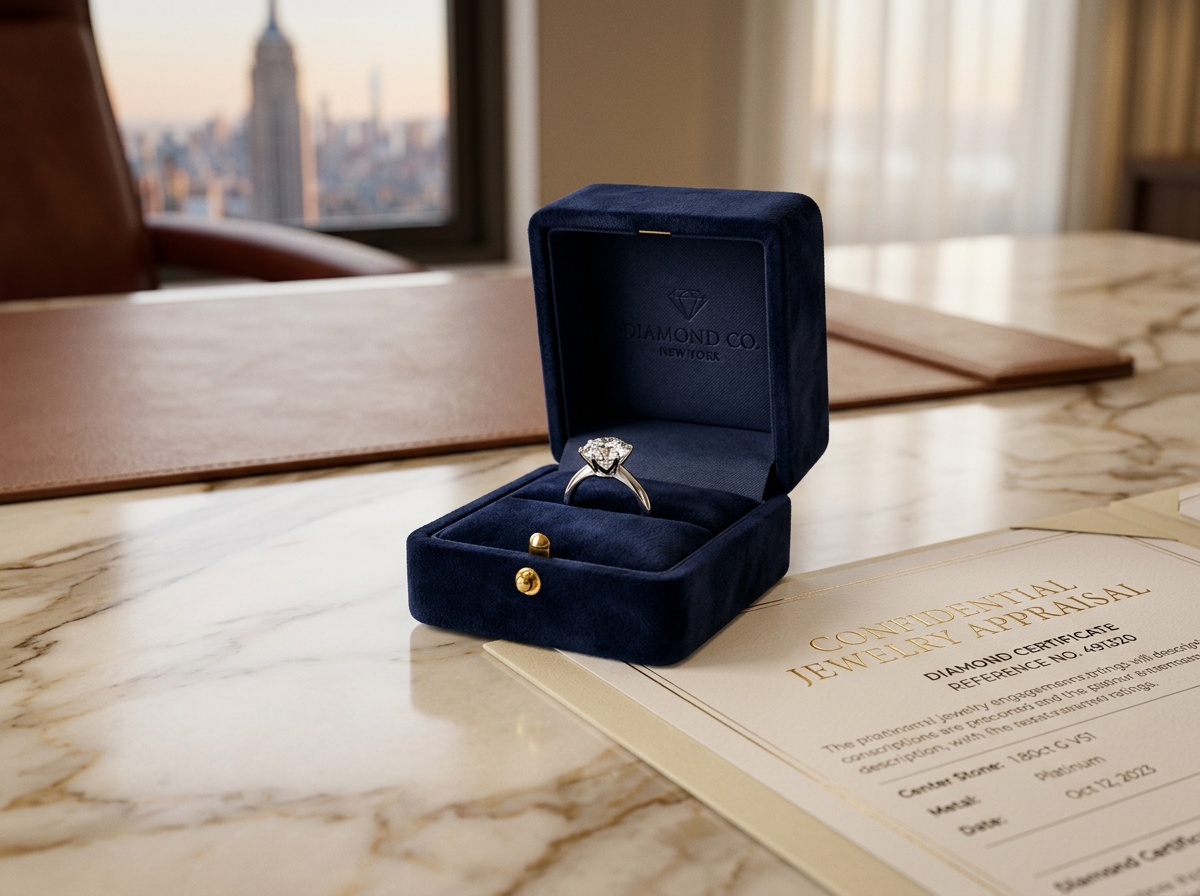
Valuation Route: Payout is based primarily on the precious metal content of the gold or platinum settings.
Single diamond earring and incomplete set evaluation at Buyers of NYC Manhattan Diamond District office
Single Earring & Incomplete Sets

Can You Sell a Single Diamond Earring or Damaged Pair?

Whether you have lost one earring of a cherished set, have a bent post, or possess an antique piece with missing stones, Buyers of NYC welcomes single diamond earrings and damaged jewelry. While the absence of a matching mate alters finished-pair marketability, individual diamonds retain independent intrinsic value based on their 4Cs attributes, mounting precious metal yield, and potential for jewelry repurposing.

Individual Diamond Value

We evaluate standalone diamond 4Cs quality, mounting metal weight, and repurposing potential with complete transparency.

In-Person Intake Protocol

Bring all available components, loose stones, detached backs, or paperwork as-found for a pressure-free in-person review.


Channel Comparison

What Are the Main Ways to Sell or Liquidate Diamond Earrings?

Ensure maximum financial return, immediate settlement speed, and counterparty security when liquidating your fine diamond earrings, stud pair, or designer suite:

Retail Jeweler Trade-In

Store Credit Focus • Retail Margins
Potential Advantages

Convenient if you are purchasing a new jewelry item and prefer store credit rather than liquid cash payout.

Risks & Questions to Ask

Is value offered in cash or store credit? Are new retail inventory prices inflated to offset the trade-in allowance?

Auction House or Consignment

15% – 25% Fees • 60–120 Days Delay
Potential Advantages

Distinctive, rare, signed (Cartier, Harry Winston, Van Cleef & Arpels), or antique diamond earring suites that may benefit from broad collector marketing.

Risks & Questions to Ask

What are the total seller commissions, cataloging charges, reserve fees, and timeline before payment is guaranteed?

Private Peer-to-Peer Marketplace

Direct-to-Consumer • Payment Risks
Potential Advantages

May capture retail-adjacent gross pricing if connecting directly with an end buyer for a standard diamond stud pair.

Risks & Questions to Ask

Are you protected against fraudulent escrow, reversed payments, transit theft, meeting stranger safety risks, and buyer disputes?

Step-by-Step Guidance

What Happens During a Diamond Earring Purchase Evaluation?

Our five-step evaluation is conducted in-person at our Manhattan Diamond District office with complete transparency and zero obligation to sell.

Step 01

Share Basic Details

Share whether you have a complete pair, single stud, hoops or designer earrings and share any available reports, receipts or boxes.

Step 02

Plan Your Visit

Visit Buyers of NYC at 36 W 47th Street, W07, in the Diamond District. Walk-ins are welcome; appointments guarantee dedicated gemologist attention.

Step 03

Gemological Review

Our gemologists examine both principal diamonds under 10× magnification, evaluate pair matching symmetry, and verify precious metal fineness.

Step 04

Review Market Route

Earrings are evaluated for the highest yielding route: finished pair, individual diamonds, signed estate piece, or metal recovery.

Step 05

Receive & Settle Offer

You receive a transparent, itemized offer with zero obligation to sell. If accepted, immediate settlement is completed on the spot via wire, check, or cash.

Preparation Guide

How to Prepare Diamond Earrings

Do not alter, polish, clean aggressively or remove stones from the mounting.

Bring Both Earrings Together

Bring both earrings together when the pair is available for full-set matching valuation.

Include All Hardware & Backs

Bring every back, post component, clip, jacket, drop, loose diamond, and detached part.

Keep Documentation Together

Gather grading reports (GIA/IGI), receipts, appraisals, brand boxes, and pouches.

Do Not Repair Beforehand

Do not replace backs, straighten posts, repair hinges, or polish metal solely for evaluation.

Avoid Aggressive Cleaning

Avoid ultrasonic cleaners, steam, or harsh dips when stone treatments or settings are uncertain.

Keep Diamonds Mounted Intact

Keep all diamonds mounted in their original settings for initial gemological evaluation.

Transparency Framework

Questions to Ask When Comparing Diamond Earring Offers

Ensure full transparency before finalizing any sale. Always ask buyers these core questions:

Q1

Pair Matching vs. Single Stone Basis

Was the pair evaluated as a complete matching set as well as individual principal diamonds?

Q2

Principal vs. Accent Melee Distribution

Was total carat weight separated into principal center diamonds versus accent melee?

Q3

Pair Matching & Marketability Impact

How did pair matching, missing components, brand, setting condition and marketability affect the route?

Q4

Valuation Route Explained

Does the offer reflect finished-pair resale, individual diamond resale, component use or metal recovery?

Q5

All Fees & Deductions Disclosed

Are all fees, commissions, shipping deductions and payment terms confirmed before comparing net payouts?

Q6

Mounted Review Limits Stated

Does the buyer transparently explain mounted review limits rather than guessing laboratory grades?

Q7

Immediate Settlement Method

What payment method (wire, check, cash) and timing apply immediately upon agreement?

Q8

Guaranteed Written Offer

Is the quoted number a preliminary online range or an exact, guaranteed in-person purchase offer?

Our Team

Connect with Our Diamond Specialists

Visit our Manhattan Diamond District office to meet with our GIA-trained gemologists and experienced jewelry specialists for a private, no-obligation evaluation.

Savannah Nguyen

Head of Precious Metals

Cody Fisher

Head of Fine Jewelry

Leslie Alexander

Head of Watches

Jacob M.

Head of Diamonds & Precious Stones

FAQ

Frequently Asked Questions About Selling Diamond Earrings

Can I sell one diamond earring?

A single earring may still be reviewed for its principal diamond, setting, metal, components, signature or matching potential. The missing mate usually affects complete-pair marketability but does not automatically eliminate value.

Does a 2.00-carat pair mean each diamond weighs 2.00 carats?

Usually not. A total weight for the pair commonly combines both principal diamonds and may also include accent stones. The distribution should be confirmed from reports, measurements or physical review.

Do the diamonds need to match perfectly?

No pair is literally identical, but shape, dimensions, color, clarity, cut appearance and face-up presentation can affect how well the earrings work together. Matching is one marketability factor, not a guaranteed premium.

Do you consider laboratory-grown diamond earrings?

Laboratory-grown diamond earrings may be considered. Origin, reports, treatments, stone characteristics, matching, setting, brand, condition and current marketability can affect the evaluation.

Can I sell diamond earrings without reports?

Yes. Reports can provide useful information, but they are not always required for an initial review. Mounted construction may limit exact conclusions, and the team should explain those limits.

Do missing backs reduce the value?

Missing or mismatched backs can affect completeness and finished-pair marketability, especially for signed or specialized designs. Bring every available component; do not buy replacements solely for the evaluation.

Do you consider damaged earrings or earrings with missing stones?

Damaged or incomplete earrings may still be reviewed. The most realistic route may involve the remaining diamonds, signed design, reusable components or precious-metal content.

Should I remove the diamonds before selling?

No. Bring the earrings intact. Removing stones can damage them or the settings and can eliminate useful information about the complete pair.

Does the brand matter?

A verifiable maker or designer can matter when the signature, construction, condition, completeness and current demand support a finished-piece market. A logo or mark alone is not conclusive.

Is a grading report the same as an appraisal?

No. A grading report describes diamond characteristics. An appraisal estimates monetary value for a stated purpose. A purchase offer is what a buyer may pay under current transaction conditions.

Do I need an appointment?

Appointments are preferred, but walk-ins are welcome during published weekday hours. Calling ahead is recommended for a large, signed, antique or report-heavy collection.

Am I required to accept an offer?

No. The purchase evaluation is free and no-obligation. You may ask questions and decide whether to proceed.

Start Your Evaluation

Visit Buyers of NYC in Manhattan’s Diamond District

Buyers of NYC is located at 36 W 47th Street, Booth W07, New York, NY 10036, in Manhattan’s Diamond District. Current published hours are Monday – Friday: 10:00 AM – 6:00 PM. Appointments are preferred and walk-ins are welcome during published hours.

Manhattan Office

36 W 47th Street, Booth W07
New York, NY 10036
(Between 5th & 6th Avenues)

Hours of Operation

Monday – Friday: 10:00 AM – 6:00 PM
Appointments preferred; walk-ins welcome

Direct Phone & Email

Phone: 646-400-4553
Email: buyersofnyc1@gmail.com

For large diamond stud pairs (2ct+ ctw), matched certified pairs, or designer diamond earrings, calling 646-400-4553 in advance reserves dedicated time with our senior diamond jewelry specialists.

Request a Diamond Earring Evaluation

Describe your diamond stud pair, drops, hoops, or single earring (per-stone carat, total weight, cut, metal, and backing style).

Carat Weight Notice: Total Carat Weight (CTW) represents the combined weight of all diamonds in the pair, not the individual stone size. Single/orphan earrings are evaluated based on the individual principal diamond.

Reviewed by Buyers of NYC Diamond Evaluation Team Last reviewed August 2026 | Manhattan Diamond District