36 W 47th St, Booth W07, New York, NY 10036Mon–Fri: 10:00 AM – 6:00 PM
36 W 47th St, Booth W07, Diamond District
Mon–Fri: 10:00 AM – 6:00 PM (Walk-ins Welcome)
Licensed NYC Buyer • Free Precision Appraisal
PRECIOUS METALS · PALLADIUM EVALUATION

Sell Palladium in NYC

Buyers of NYC purchases eligible palladium jewelry, coins, bars, bullion, scrap and other palladium-bearing items at our Manhattan Diamond District office.

Our team reviews the item’s form, observable marks, composition, weight, condition, supporting documents and current marketability before deciding whether to present an offer. The purchase evaluation is free, and you are not required to sell.
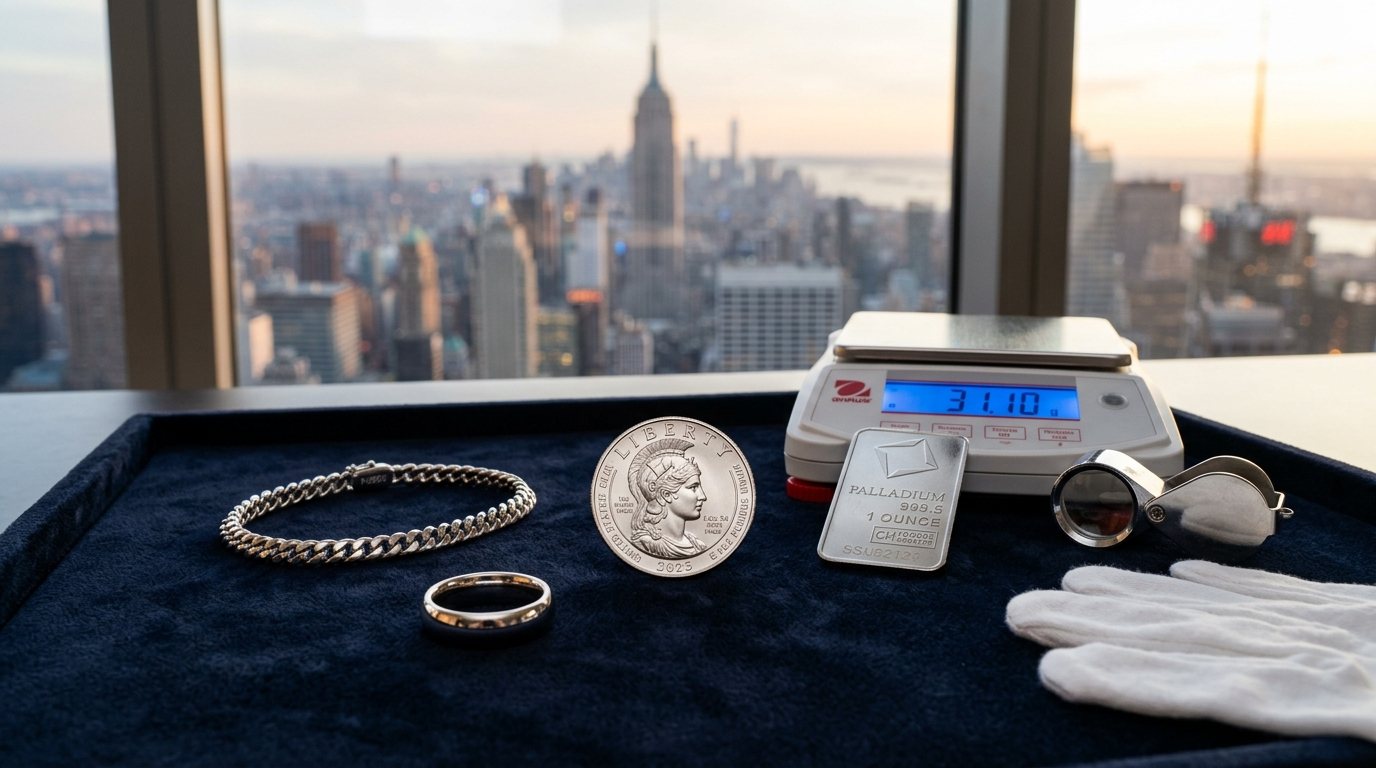

Palladium wedding band, American Palladium Eagle coin and palladium bar on evaluation mat with scale and loupe at Buyers of NYC Manhattan Diamond District
LICENSED & CERTIFIED IN NEW YORK CITY

Recognized Credentials, Industry Licenses & Certified Gemologists

TRANSPARENT PRECIOUS METALS EVALUATION

What to Expect When You Sell Palladium

No Obligation Evaluation

Requesting an in-person purchase evaluation carries zero pressure. Review the offer explanation and decide freely without obligation.

Metal + Product Value

Jewelry, coins, and bullion are screened for complete-piece, brand, collector, and recoverable palladium value.

Diamond District Office

Evaluations take place securely in-person at 36 W 47th Street, Booth W07. Walk-ins welcome; appointments preferred.

Immediate Settlement

When an agreement is reached, transaction records are completed immediately and payment is disbursed on the spot.

Palladium Directory

What Palladium Items Does Buyers of NYC Buy?

Palladium appears in fine jewelry, investment coins, bullion ingots, and specialty materials. Buyers of NYC evaluates consumer items and provides clear guidance on unusual holdings:
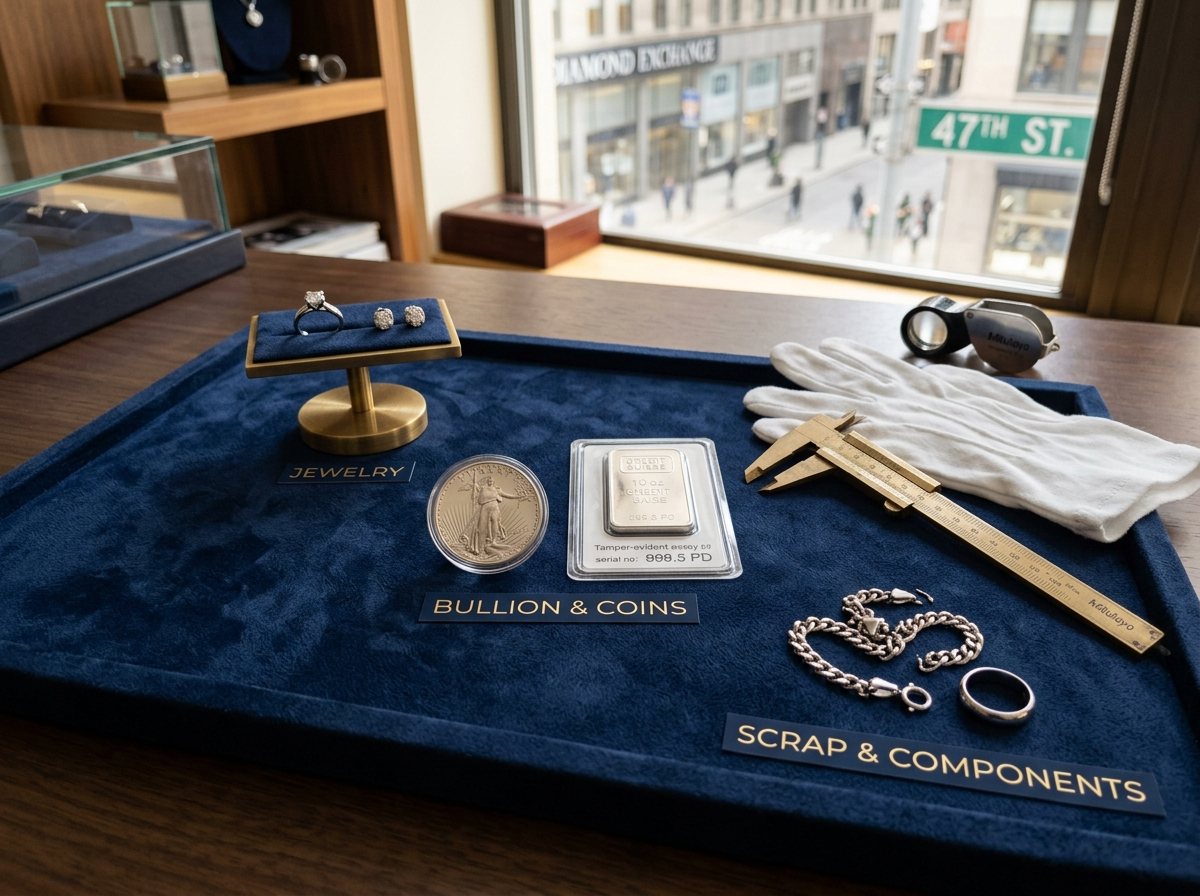
Palladium jewelry, coins and bars arranged by category on evaluation mat in New York City
AUTHENTIC EVALUATION

Fine Jewelry, Bullion Coins & Sealed Ingot Holdings

01

Fine Palladium Jewelry

Pd 950 / Pd 500

Rings, wedding bands, diamond engagement settings, necklaces, bracelets, earrings, brooches, cufflinks, and signed luxury designer mountings.

Representative Examples

Wedding bands, diamond settings, chains, vintage palladium pieces, designer mountings

Evaluation Considerations

Maker attribution, gemstone presence, condition, visible hallmarks, gross weight and fineness

Request a Palladium Evaluation
02

Palladium Coins

Sovereign Bullion

American Palladium Eagles, Canadian Maple Leafs, Russian Ballerinas, and other official sovereign legal-tender bullion coins.

Representative Examples

1 oz American Palladium Eagles (uncirculated/proof), Canadian Maple Leafs, Russian Ballerinas

Evaluation Considerations

Issuing authority, fine weight (1 oz), strike finish, date, surface preservation, packaging and collector demand

Request a Palladium Evaluation
03

Bars & Bullion

.9995 Pure

Minted bars, cast ingots, sealed assay blister packs, and recognized retail bullion products from major international refiners.

Representative Examples

PAMP Suisse, Credit Suisse, Valcambi, Johnson Matthey, Engelhard, Baird & Co. bars

Evaluation Considerations

Verified weight, 999.5 fineness, recognizable refiner markings, intact assay packaging and product liquidity

Request a Palladium Evaluation
04

Scrap & Damaged Items

Metal Recovery

Broken rings, snapped chains, worn mountings, single earrings, sizing cutoffs, casting sprues, and palladium-bearing components.

Representative Examples

Cracked mountings, sizing cutoffs, worn jewelry findings, bent rings, single cufflinks

Evaluation Considerations

Palladium-bearing alloy composition, isolation of non-palladium components, reusable parts and recoverable weight

Request a Palladium Evaluation
05

Mixed or Uncertain Lots

Inherited & Mixed

Unmarked white-metal jewelry, inherited collections, and items believed to contain precious platinum-group metals.

Representative Examples

Unstamped white metal jewelry, multi-item estate parcels, family collections of mixed metals

Evaluation Considerations

Physical inspection, non-destructive testing, hallmark verification, separation from white gold/platinum

Request a Palladium Evaluation
06

Specialty Material — Call First

Call Ahead

Industrial components, catalyst materials, dental alloys, laboratory crucibles, thermocouple wire, foil, and specialty forms.

Representative Examples

Laboratory crucibles, thermocouple wire, catalyst materials, dental alloys, industrial sheet/wire

Evaluation Considerations

Safety verification, documentation, quantity, operational eligibility, and composition confirmation

Call 646-400-4553 Before Visiting
ACCEPTANCE & SCREENING POLICY

Do not assume an unmarked white metal piece has only scrap value. In-person physical screening accurately identifies palladium from platinum, white gold, and silver without risk.

Acceptance Note: Acceptance is item-specific. An item appearing in an example above is not automatically genuine or eligible for purchase. In-person physical screening is required.

Evaluation Best Practice

Bring the Complete Item as Found

Keep matched earrings, spare links, original boxes, receipts, and certificates together. Do not remove gemstones, polish the metal, or discard broken components before evaluation. Completeness preserves options.

Critical Warning

Never Acid Test or File at Home

Avoid filing, drilling, scratch testing, or applying chemicals to palladium items at home. Destructive testing damages jewelry, impairs coin surfaces, and reduces offer value. Professional non-destructive testing is provided in-office.

Material Identification

Palladium vs. Look-Alike White Metals

Because several precious metals and surface platings appear bright white, color alone is not enough to identify palladium. Understanding the distinguishing characteristics is essential.

Precious Metal Comparisons

Similar-looking platinum-group and precious metals

Platinum (Pt)

PGM Family

Both are platinum-group metals with naturally white appearance. Platinum is significantly denser (21.45 g/cm³ vs. 12.02 g/cm³) and markedly heavier in the hand.

Key Distinction: Stamped Pt950/PLAT vs. Pd950/PALL; density and certified testing.

White Gold (Au)

Karat Gold Alloy

Gold alloyed with nickel or palladium and typically rhodium-plated for a bright white finish. Rhodium wear reveals underlying faint yellow tint.

Key Distinction: Karat marks (14K, 18K, 585, 750) and wear pattern at contact edges.

Sterling Silver (Ag)

Precious Silver

Naturally white precious metal that can carry numerical marks (.925). Silver develops dark surface tarnish and is softer than palladium.

Key Distinction: Sterling, 925 marks, oxidation behavior, and density verification.

Platings & Base Metals

Surface coatings and costume jewelry imitations

Rhodium-Plated Jewelry

Surface Plating

A microscopic electroplated rhodium layer conceals the underlying core metal. The core may be silver, brass, or low-karat alloy.

Key Distinction: Underlying metal disclosure, edge wear, and non-destructive testing.

Base Metal / Stainless Steel

Non-Precious

Fashion items and industrial alloys imitating precious metal appearance. Lack precious-metal hallmarks and may exhibit magnetism.

Key Distinction: Absence of recognized hallmarks, magnetic response, and weight.

Fine Palladium Calculation

Conversion Rule

Fine palladium weight = confirmed palladium-bearing weight × confirmed fineness (e.g., 10.0g at .950 = 9.50g fine Pd). 1 troy oz = 31.1035 g.

Formula Basis: NIST precious metals standards. Gross weight excludes stones/solder.

Valuation Methodology

How May a Palladium Item Be Evaluated?

Palladium valuation considers item form, observable hallmarks, metallurgical composition, net payable weight, gemstone credit, and current spot market demand.
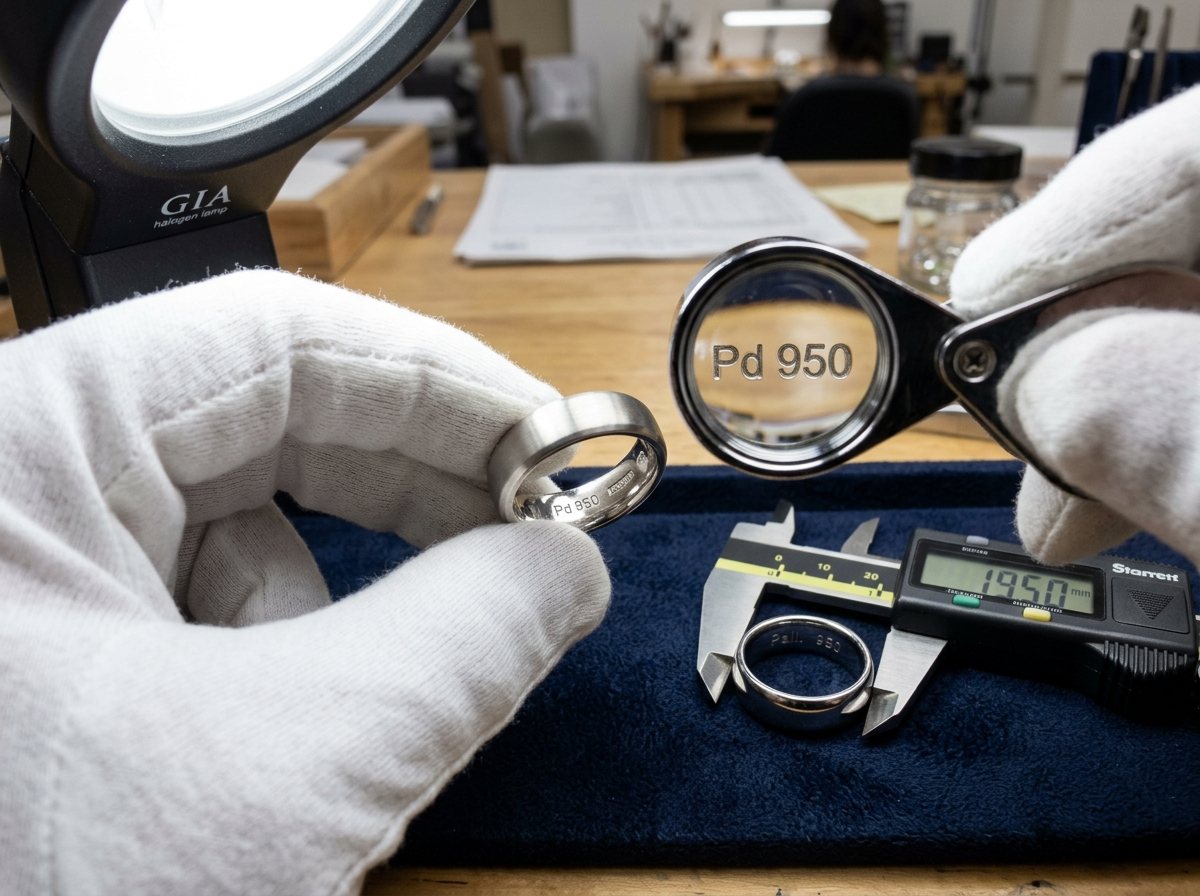
Jeweler examining palladium hallmarks under magnification

1. Form, Classification & Market Route

Product Route

Item classification establishes whether the piece follows finished jewelry resale, numismatic collector demand, recognized bullion trading, or recoverable metal recycling.

Seller Guidance: Intact signed pieces, wearable bridal jewelry, and bullion coins avoid scrap metal discounting.

2. Observable Hallmarks & Stated Fineness

Hallmark Review

Under 10x magnification, quality marks such as “Pd 950”, “Pd 500”, “Pall.”, and maker stamps are examined to assess intended alloy fineness under FTC standards.
Seller Guidance: Visible stamps provide an initial baseline and are verified alongside physical non-destructive testing.
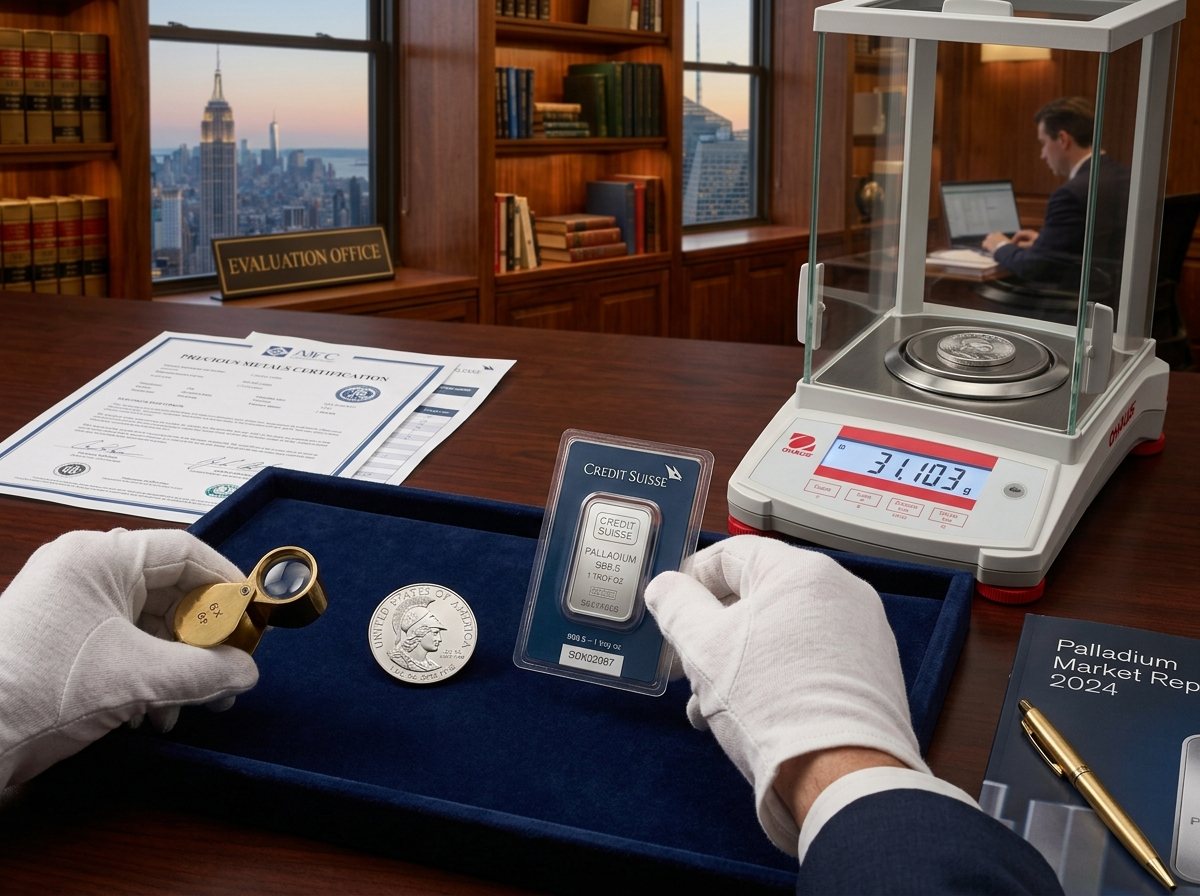
Palladium bullion coins and bars on certified scales

3. Metallurgical Composition & Non-Destructive Testing

Precision Metrology

Non-destructive XRF spectroscopic analysis and physical density checks confirm true parts-per-thousand palladium content, distinguishing solid palladium from white gold or platings.

Seller Guidance: Never scratch-test or apply chemicals to items at home; precision testing is performed safely in-office.

4. Certified Scale Weight & Fine Metal Accounting

Certified Scales

Items are weighed on certified Class II scales. Non-palladium elements (springs, solder, liners) are properly isolated so payout reflects exact payable fine metal.
Seller Guidance: Fine Palladium Weight = Confirmed Weight × Alloy Fineness (1 troy oz = 31.1035 g).
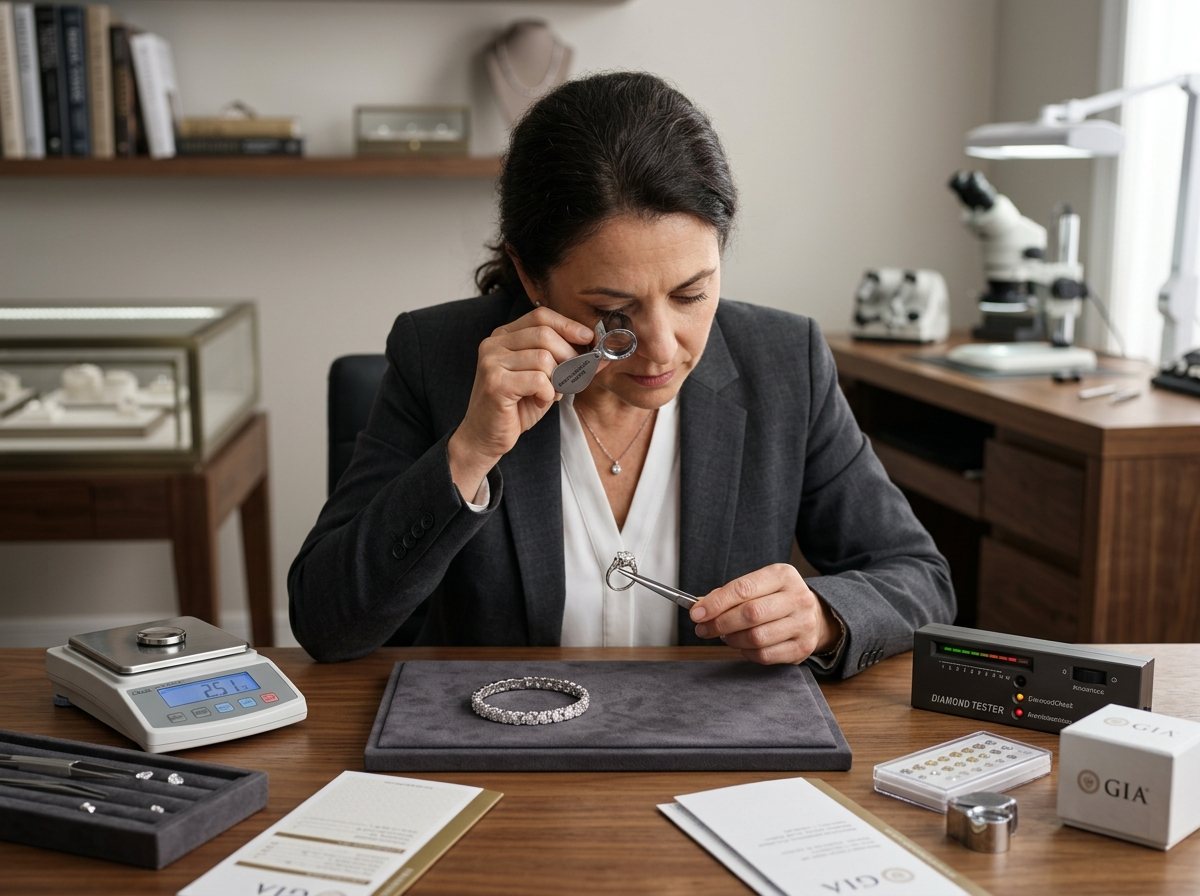
Gemologist evaluating palladium diamond jewelry at Buyers of NYC

5. Diamonds, Gemstones & Complete Piece Value

Separate Credit

Diamonds and precious gemstones mounted in palladium settings are evaluated separately by certified GIA gemologists on 4Cs criteria and added to the total payout.

Seller Guidance: Leave all stones mounted in settings; do not attempt stone removal at home.

6. Bullion Packaging & Live Spot Settlement

Transparent Net

Minted bars (PAMP, Valcambi) and coins in sealed assay blister cards trade at recognized bullion premiums. Offers reflect transparent live spot palladium market pricing.

Seller Guidance: Zero assay fees, refining deducts, or hidden commissions from the agreed settlement amount.
Calculation Framework
METALLURGICAL CONVERSION

Troy Weight and Fine-Palladium Content

Precious metals are commonly measured in troy units. One troy ounce equals 20 pennyweights and 31.1034768 grams. A household ounce is not the same as a troy ounce.

For educational purposes, fine-palladium content can be understood as the confirmed palladium-bearing weight multiplied by the confirmed fineness. Gross item weight may include gemstones, clasps, springs, solder, base-metal parts, packaging or other materials, so the complete object’s weight is not automatically its palladium weight.


Confirmed Item Weight 50.00 g Gross Scale Weight
×
Confirmed Fineness .950 (95%) Pd 950 Alloy Standard
=
Fine Palladium Weight 47.50 g Fine Pd 1.527 Troy Ounces Pure
Educational relationship: Fine palladium weight = confirmed palladium-bearing weight × confirmed fineness. This relationship does not produce a guaranteed purchase offer. Product recognition, condition, verification, marketability and transaction costs may also matter.
Source basis: NIST, Precious Metals Conversion Information: 1 troy ounce = 20 dwt = 31.1034768 g.
Selling Channel Comparison

Comparing Ways to Sell Palladium in New York

Evaluate each selling option based on palladium testing capability, transparent weight accounting, speed of payment, fee deductions, and physical security.

Local Gold & Silver Buyers

Compare Expertise
Potential Advantages

Convenient local storefronts capable of handling common precious-metal transactions quickly.

Questions to Ask

Do they actively buy palladium, or treat it as platinum scrap? Do they have equipment to verify palladium fineness accurately?

Online Mail-In Buyers

Variable Risk
Potential Advantages

Remote submission kits for sellers located far from precious-metal trading hubs.

Questions to Ask

What shipping insurance limits apply to valuable palladium? What happens if you decline a reduced offer after mailing items in?

Industrial Refineries

High Minimums
Potential Advantages

Equipped for large industrial lots, commercial scrap, and bulk precious-metal refining melts.

Questions to Ask

Do they accept small consumer lots? What are melt loss charges, assay fees, minimum lot sizes, and settlement turnaround times?

Step-by-Step Guidance

How the Palladium Purchase Evaluation Works

Call first for large, heavy or unusual material. Do not leave valuables unattended in a vehicle.

Step 01

Describe the Item

Call or submit basic information about the form, visible marks, quantity, condition and documents. Photographs can help route the inquiry but do not confirm composition or create an offer.

Step 02

Visit the Manhattan Office

Bring the item, supporting records and valid identification that may be required if a sale is completed. Call first for large, heavy or unusual material.

Step 03

Review Identity and Condition

The team examines the form, marks, construction, condition, product details and supporting evidence, using only confirmed methods and procedures.

Step 04

Consider the Market Route

The team reviews whether complete-piece, collector, bullion, component or recoverable-metal value is most appropriate.

Step 05

Review a Possible Offer

If Buyers of NYC wishes to purchase the item, it may present an offer and explain the principal factors. You may accept or decline without obligation.

Preparation Guide

How to Prepare Palladium Before an Evaluation

Bring the item as found. Avoid polishing, filing, drilling, scratch testing, acid testing or melting it.

Bring the Item as Found

Avoid polishing, filing, drilling, scratch testing, acid testing or melting the item before the evaluation.

Keep Parts and Records Together

Keep stones, clasps, parts, packaging, receipts, certificates and assay cards together.

Leave Sealed Packaging Closed

For coins and bars, do not open sealed packaging merely to inspect the product.

Mask Serial Numbers

Mask complete serial numbers in public photographs and bring the full document or product in person.

Inventory Mixed Lots

Create a simple inventory for a mixed lot: item type, visible marks, approximate quantity and any known provenance.

Call Before Specialty Material

Call before transporting large-format bullion or specialty material. Do not bring catalytic converters, industrial components, powders, sponge, dental material, laboratory material or electronic scrap without speaking with the team first.

Transparency Framework

How Should I Compare Palladium Offers?

Compare more than the final number. Ask each buyer the questions below before accepting an offer.

Q1

What the Buyer Identified

What does the buyer believe the item is?

Q2

Weight and Fineness

What weight and fineness is the buyer using?

Q3

Non-Palladium Components

Were non-palladium components excluded from the metal calculation?

Q4

Jewelry or Collector Screening

Was the piece screened for jewelry or collector value before a metal-only route?

Q5

Benchmark and Market Route

What benchmark or market route was considered?

Q6

Fees and Payment

Do fees or deductions apply, and how will payment be handled if you accept?

Our Team

Connect with Our Experts

A team of buyers reviews eligible gold, silver, platinum and palladium items at our Manhattan Diamond District office. Named credentials, staff counts and testing instruments are published only when verified.

Savannah Nguyen

Head of Precious Metals

Cody Fisher

Head of Fine Jewelry

Leslie Alexander

Head of Watches

Jacob M.

Head of Diamonds & Precious Stones

FAQ

Frequently Asked Questions About Selling Palladium

Do you buy palladium jewelry?

Buyers of NYC considers eligible palladium rings, wedding bands, chains, bracelets, earrings, pendants, findings, and other jewelry. The team reviews composition, complete-piece potential, gemstones, condition, and current marketability.

How can I tell whether my ring is palladium?

Hallmarks such as “Pd.”, “Pall.”, “Pd 950”, or “Pd 500” are standard quality marks. However, appearance and stamps alone are not conclusive. Bring the item to our office for physical, non-destructive testing rather than attempting chemical testing at home.

Is palladium the same as platinum?

No. Palladium and platinum are distinct elements within the platinum-group metals. Palladium is noticeably lighter in density (12.02 g/cm³ vs. 21.45 g/cm³ for platinum), has distinct alloy compositions, and trades on separate market pricing.

Do you buy palladium coins?

Yes. The team considers government-issued sovereign palladium coins, including American Palladium Eagles, Canadian Palladium Maple Leafs, Russian Ballerina coins, and others. Issuer, fineness (99.95%), strike finish, date, condition, and collector demand are reviewed.

Do you buy palladium bars and ingots?

Eligible minted and cast palladium bars are considered (1 oz, fractional, 10 oz, 100g, 1 kg). Recognized refiners (PAMP Suisse, Credit Suisse, Valcambi, Johnson Matthey, Engelhard), weight, fineness, assay packaging, and serial numbers are evaluated.

Does an assay card prove that a palladium bar is authentic?

An assay card provides useful documentation, but it does not alone guarantee that the enclosed bar is genuine or untampered. Our specialists review the physical bar, packaging integrity, dimensions, and weight together.

Is a Pd stamp enough to determine value?

No. The stamp indicates intended alloy composition, but verified weight, confirmed fineness, stones, maker attribution, condition, and current market demand determine the actual purchase offer.

Do you buy broken or damaged palladium?

Yes. Broken rings, damaged mountings, sizing scrap, and incomplete pieces remain eligible for evaluation based on their confirmed palladium-bearing metal content, reusable components, and gemstones.

Do you buy catalytic converters?

Do not bring catalytic converters to the office without speaking to our team first. Legal compliance, ownership documentation, environmental handling, and operational eligibility must be verified by phone beforehand.

Can you quote palladium from a photograph?

Photographs help identify item type and hallmarks, but they cannot confirm composition, weight, or authenticity. A firm purchase offer requires in-person physical evaluation at our Manhattan office.

Do I need an appointment?

Appointments are preferred to minimize wait times, but walk-ins are welcome during published business hours (Monday – Friday: 10:00 AM – 6:00 PM). Call first for large lots or heavy bullion.

Am I required to sell after the evaluation?

No. The purchase evaluation is completely free, and you are under no obligation to accept any offer presented. You are free to take your items with you at any time.

Start Your Evaluation

Visit Buyers of NYC in Manhattan’s Diamond District

Buyers of NYC is located at 36 W 47th Street, Booth W07, New York, NY 10036, in Manhattan’s Diamond District. Current published hours are Monday – Friday: 10:00 AM – 6:00 PM. Appointments are preferred and walk-ins are welcome during published hours.

Manhattan Office

36 W 47th Street, Booth W07
New York, NY 10036
(Between 5th & 6th Avenues)

Hours of Operation

Monday – Friday: 10:00 AM – 6:00 PM
Appointments preferred; walk-ins welcome

Direct Phone & Email

Phone: 646-400-4553
Email: buyersofnyc1@gmail.com

For high-weight palladium bullion, specialty industrial forms, or substantial lots, calling 646-400-4553 in advance reserves dedicated time with our senior palladium specialists.

Request a Palladium Evaluation

Describe your palladium jewelry, coin, bar, bullion, or scrap items, approximate weight, and visible hallmarks.

Evaluation Policy: Identification, seller verification, and transaction records are required at purchase. Online submissions are preliminary for routing and do not constitute a binding purchase offer.

Reviewed by Buyers of NYC Palladium Evaluation Team Last reviewed August 2026 | Manhattan Diamond District