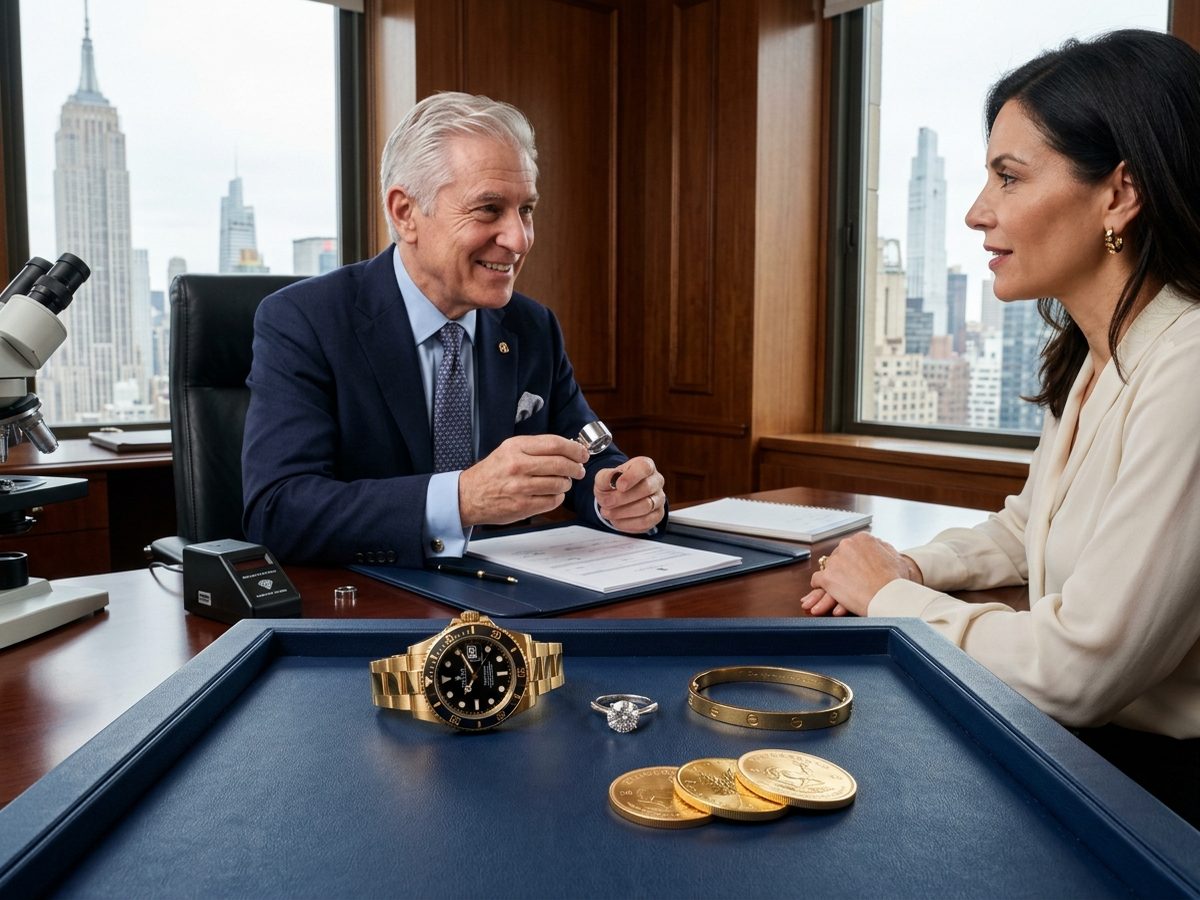





A pawn loan lets an eligible customer use an approved item as collateral while retaining a contractual right to redeem it. If Buyers of NYC operates this service under an active license, the customer receives written loan terms before accepting, leaves the collateral in controlled custody, and can reclaim the item by paying the required redemption amount within the applicable period. If the loan is not redeemed, the item may be sold only through the process required by the agreement and applicable law.
Important: Pawn is different from an outright sale. A sale transfers ownership to the buyer when the transaction is completed. A pawn loan provides money against the item while the customer’s redemption right remains in effect. Neither option is automatically better; the right choice depends on whether the customer wants to keep the item, the cost of the loan, the likelihood of redemption and the terms presented in writing.
This page describes a regulated secured-credit transaction. Collateral loans are conducted in person at our licensed premises subject to verified identification, written loan terms, pawn ticket issuance, and Truth in Lending disclosures. Rates, fees, maturity dates and redemption schedules are provided in writing prior to loan consummation.
A pawn loan is credit secured by personal property. The customer brings an eligible item to the licensed premises, the business reviews the item and determines whether it is willing to accept it as collateral, and the customer decides whether to accept the written loan terms. The item remains with the pawnbroker during the loan.
The written terms should show the amount financed, finance charge, annual percentage rate, redemption amount, maturity date, service charges and other material conditions. The customer should read those terms before accepting and retain the pawn ticket or memorandum.
Understanding the legal and financial boundaries between a collateralized loan and an outright purchase ensures you make the right choice for your collection:
The customer retains a right to redeem under the loan terms.
Ownership transfers when the sale is completed.
Loan proceeds subject to written credit terms.
The agreed purchase price.
Pay the required redemption amount before the applicable sale process.
The completed sale is not automatically reversible except for any legal rights that apply.
The item may eventually be sold after default and required procedures.
The buyer retains the item under the completed purchase.
Pawn ticket, disclosures, identification, ownership/authority records and payment records.
Purchase receipt, identification, ownership/authority records and payment record.
The recommended launch program focuses on valuables that the team can identify, store, monitor and evaluate within an approved market and risk policy. Actual eligibility remains item-specific.
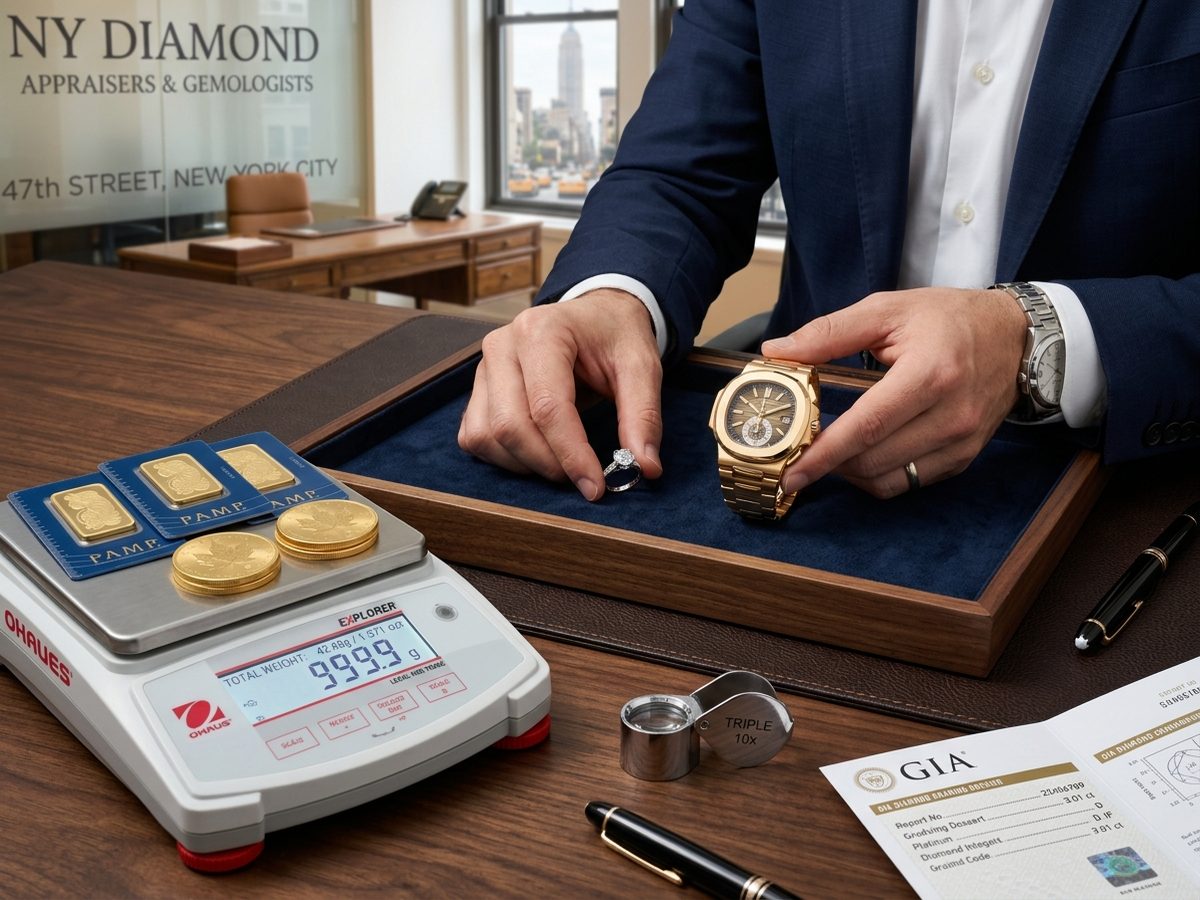
In-person custody, certified scale assay, and gemological testing conducted directly in your presence.
Gold or platinum jewelry, signed pieces, diamond jewelry, estate and selected antique items
Eligible Rolex, Cartier, Patek Philippe, Audemars Piguet, Breitling and other watches
Eligible loose or mounted stones with appropriate identification and documentation
Eligible gold, silver, platinum and palladium items
Selected coins, bars and bullion products that meet authenticity, custody and liquidity requirements
Multiple eligible items when the appointment and custody process can support them
The program should not accept weapons, hazardous material, stolen or disputed property, counterfeit goods, items from anyone actually or apparently under 18, or property outside the company’s lawful purchasing, storage and resale capabilities.
A pawn-loan amount is not the same as retail price, insurance replacement value or a purchase offer. The business may consider the item’s identity, authenticity risk, condition, completeness, current marketability, expected lawful disposition route, price volatility, storage and care requirements, and its approved loan-to-value policy. Two items with the same brand or material may support different loan amounts. The customer should receive the actual amount financed, finance charge, APR, redemption amount, due date and fees in writing before accepting.

Determines whether the business can reliably accept and later dispose of the collateral if necessary. Physical hallmarks, testing results and reference consistency are confirmed in your presence.
A pawn-loan amount is not the same as retail price, insurance replacement value or a purchase offer. Focuses on a lawful, commercially reasonable secondary-market route rather than aspirational retail figures.
Affects marketability, repair cost, liquidity and risk across estate jewelry, diamonds and watches. Keeping original boxes, warranty cards, receipts and spare components together strengthens collateral value.
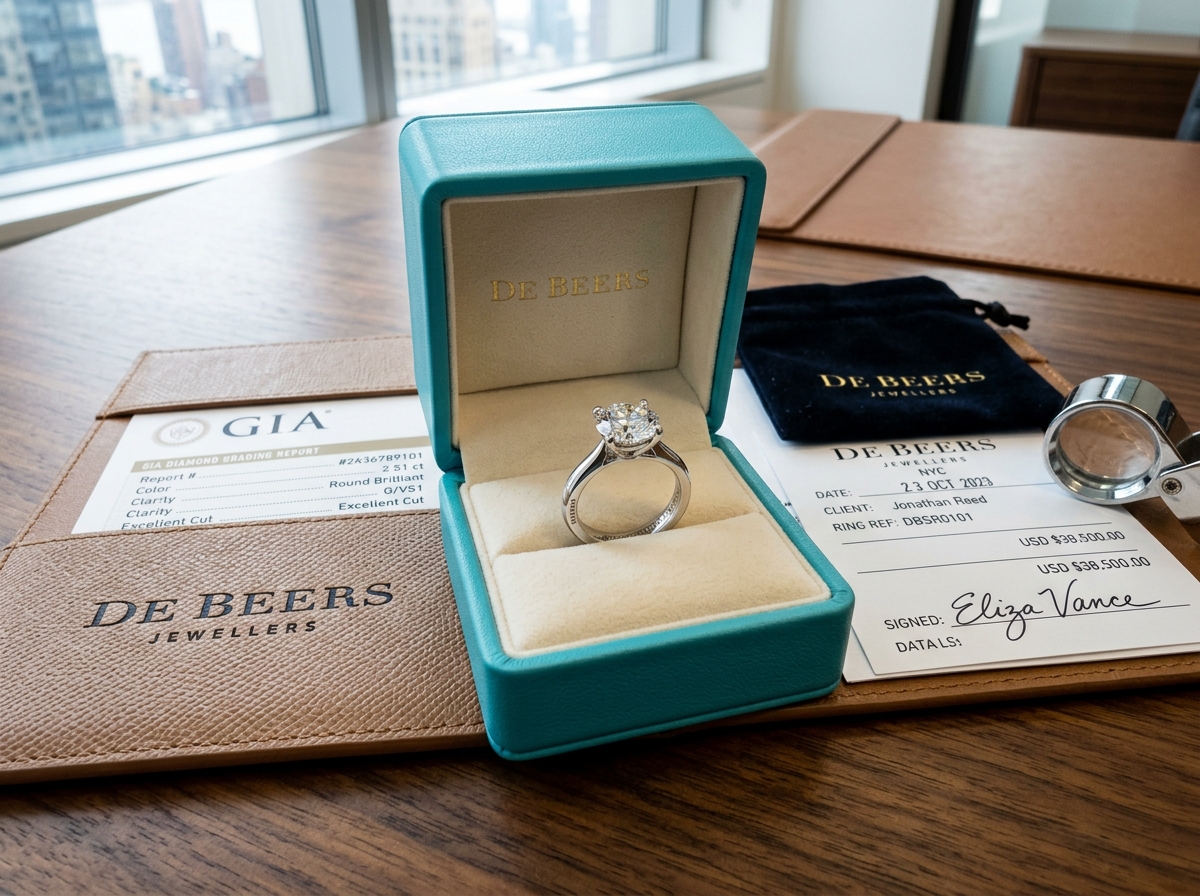
Precious metals, certified diamonds and luxury watches can move differently during the loan term. Collateral amounts reflect conservative lending policies designed to protect customer redemption rights.
Storage, care, notice, auction/private-sale and compliance costs may affect approved policy. Pledged collateral enters documented vault custody with dual-control security.
Two items with the same brand or material may support different loan amounts. The customer should receive the actual amount financed, finance charge, APR, redemption amount, due date and fees in writing before accepting.

Our collateral loan workflow follows seven structured stages designed for complete custody transparency and zero selling pressure:
1. Request an appointment. Describe the item in general terms so the appropriate review can be planned.
2. Bring the item and required identification. The business verifies age, identity and ownership or authority at the licensed premises.
3. Review the collateral. The team documents the item, condition, components, accessories and relevant market factors.
4. Review the written loan offer. Read the amount financed, finance charge, APR, redemption amount, maturity date, service charges and other terms.
5. Accept or decline. There should be no obligation to proceed merely because the item was reviewed.
6. Funding and custody. After acceptance, the approved funding method is completed and the item enters documented storage.
7. Redeem or follow the approved extension process. Retain the ticket and confirm the current redemption amount before the deadline.
Review every material term in your written agreement and understand how your collateral is secured and protected throughout the loan term:
Ten essential variables clearly stated on your written pawn ticket and Truth in Lending disclosures:
Amount financed: the money provided to you.
Finance charge: the dollar cost of credit under the disclosure.
Annual percentage rate: the standardized annualized credit cost shown in the required disclosure.
Redemption amount: the amount required to recover the item at the stated time.
Maturity date and any grace or statutory periods.
Service charges and lost-ticket procedure.
Extension or renewal policy, if offered.
Default, notice, sale and surplus procedures.
Accepted payment methods for redemption.
How the item is described, stored and released.
Our institutional standards for serialized vault intake, storage logs, and statutory surplus recovery:
The recommended operating model photographs and describes the item at intake, assigns an internal custody identifier, records included components, uses item-appropriate protective packaging, restricts access, logs custody movements and reconciles stored collateral periodically.
High-value movements and releases should use dual control to preserve absolute accountability across all access tiers.
The website should describe insurance only to the extent supported by the actual policy and broker confirmation. No facility, vault, alarm or coverage claim should be published unless it can be documented and kept current.
Failure to redeem can result in the collateral being sold after the required period, notices and procedures. The customer should not assume that the item is sold immediately on the due date. Current New York law includes holding, notice, sale and surplus requirements that must be reflected in the approved documents and staff process.
If a sale produces net surplus after the deductions allowed by law, the person entitled to redeem may have a right to that surplus. The final website language and every notice must be approved by New York counsel.
Every collateral loan generates a contemporaneous, auditable record suite to guarantee customer protection and regulatory compliance:
Confirms legal age (18+) and verified government-issued identification at the licensed premises.
Documents the customer’s lawful title and authority to pledge the property.
Records comprehensive photography, physical description, serials, and condition at intake.
Documents internal gemological/horological evaluation and approved collateral value.
The core statutory contract containing loan terms, maturity date, and state-mandated notices.
Mandatory federal disclosures: amount financed, finance charge, APR, and redemption schedule.
Verifies lawful, documented funding to the borrower upon ticket execution.
Tracks due dates, statutory grace periods, and counsel-approved loan extensions.
Confirms payment receipt and documented hand-to-hand release of pledged property.
Documents 30-day notice of intent to sell, commercially reasonable disposition, and net surplus return.
A few simple preparation steps ensure your appointment is efficient, discrete and compliant with New York regulatory requirements:
Bring current government-issued identification and be prepared to confirm ownership or authority.
Bring the item as found rather than polishing, repairing, servicing or altering it solely for the appointment.
Keep boxes, papers, reports, receipts, spare links, straps, matched pieces and loose components together.
Do not upload complete serial numbers, identity documents, bank details or ownership records through the public inquiry form.
Call before transporting a large collection, heavy bullion or unusually high-value property.
Decide whether retaining the item is important enough to justify the cost and redemption obligation of a loan.
When the licensed service is active, request an appointment to compare a collateral loan with an outright purchase offer. Review every loan cost, deadline and right in writing before deciding. You are not required to pawn or sell merely because the item is evaluated.
Our in-house gemologists, watchmakers, and numismatic appraisers inspect your valuables directly in your presence with complete transparency and zero obligation to pawn or sell.

Head of Precious Metals

Head of Fine Jewelry

Head of Watches

Head of Diamonds & Precious Stones
A pawn transaction preserves a contractual right to redeem the pledged item. The exact rights, deadlines and consequences are stated in the pawn ticket, disclosures and applicable law.
No. An outright sale transfers the item to the buyer for the agreed price. A pawn loan provides credit against the item and allows redemption under written terms.
No. Eligibility depends on the item, identity and ownership verification, current policy, lawful acceptance, marketability, storage, risk and the business’s approved lending limits.
The website should not make an absolute credit-check promise until the approved underwriting and reporting policy is confirmed. Ask for the current eligibility requirements before applying.
The amount is item-specific and is not determined by retail or insurance value alone. The written offer shows the actual amount financed and all material terms.
A completed transaction requires age and identity verification and may require ownership or authority information. The public inquiry form should not collect your identification documents.
The approved documents should explain early redemption and the amount due. Request a current redemption figure before making payment.
Extensions should be offered only under a written, counsel-approved policy. Do not rely on a verbal promise; obtain the new terms and dates in writing.
New York law provides a lost-ticket process. Contact the licensed premises immediately and follow the identity and bond or fee procedure stated in the approved policy.
The item is not automatically sold without process. Applicable holding, notice, sale and surplus rules must be followed.
The answer depends on the legal structure and approved documents. The page should not make a recourse or deficiency statement until counsel confirms the exact program.
The recommended launch model is in-person only. Do not mail an item or send sensitive documents unless a separate compliant program is implemented and you receive written instructions.
Request an appointment at our Manhattan Diamond District office at 36 W 47th Street, W07. Describe your item in general terms so the team can prepare the appropriate gemological, watchmaking or precious-metal evaluation suite. A public inquiry does not approve a loan or establish credit terms. No loan is completed until you receive and voluntarily accept written terms at our licensed premises.
36 W 47th Street, W07
New York, NY 10036
(Between 5th & 6th Avenues • Private Evaluation Suite W07)
Monday – Friday: 10:00 AM – 6:00 PM
Appointments preferred; walk-ins welcome
Phone: 347-790-8383
Email: buyersofnyc1@gmail.com
Request a Pawn Appointment | Call 347-790-8383 | Visit 36 W 47th Street. In-person reviews are discrete and private with zero selling obligation. For large collections or heavy bullion, calling in advance ensures dedicated security and vault scheduling.
Submit general item details to schedule an in-person appointment. Do not upload government identification, banking information or complete serial numbers through this form.
Privacy & Safety Notice: Do not upload government identification, divorce papers, wills, trusts, court orders, or sensitive financial records. Online submissions are preliminary and do not create a purchase offer, authentication, or obligation to sell.